Join Our Community










Get the earliest access to hand-picked content weekly for free.
Spam-free guaranteed! Only insights.
Join Our Community
Get the earliest access to hand-picked content weekly for free.
Spam-free guaranteed! Only insights.
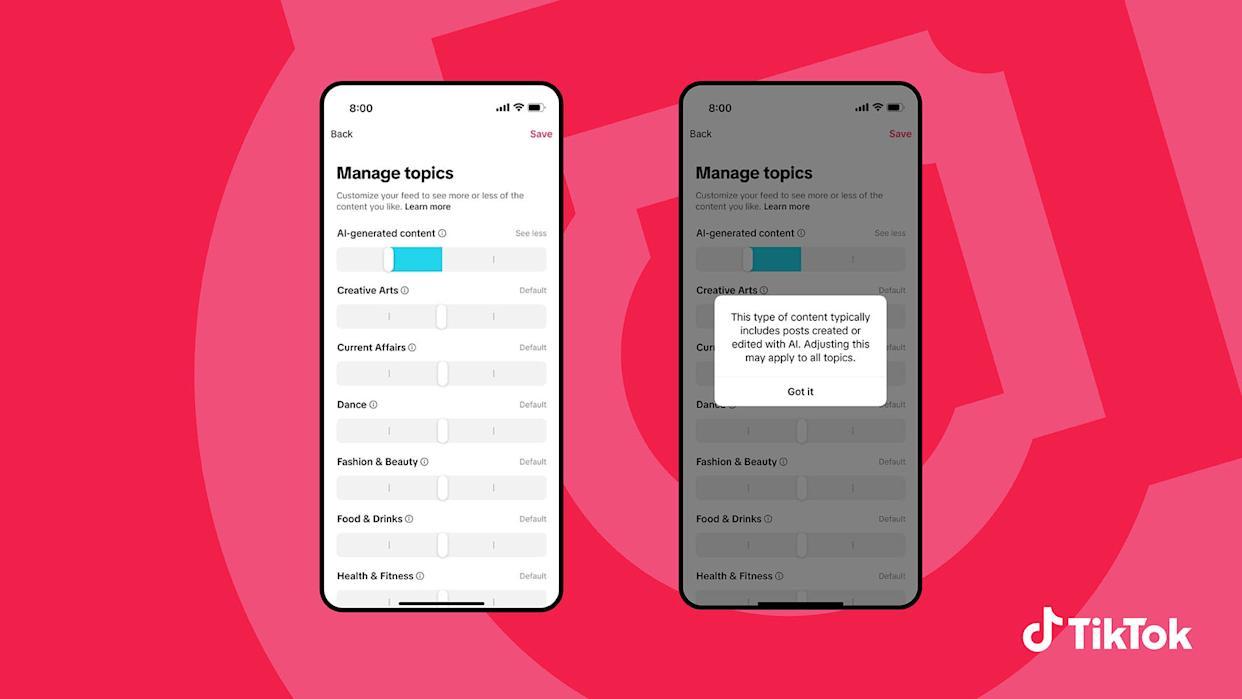
TikTok is giving users more control over their “For You” page (FYP) with a new feature allowing them to reduce the amount of AI-generated content they see. This move comes as concerns grow about the proliferation of synthetic media on the platform and its potential impact on user experience. The company announced this week that it’s testing a “less AI content” option, responding to feedback from users who want a more authentic and human-curated feed. This is a significant step towards transparency and user agency in the age of increasingly sophisticated artificial intelligence.
The rise of AI-generated content, while offering creative possibilities, has also brought challenges. On TikTok, this manifests as videos created using AI voices, filters that drastically alter appearances, and even entirely synthetic characters. While some users enjoy these innovations, others find them disorienting, misleading, or simply prefer content created by real people. The platform has been grappling with how to balance the novelty of AI with the desire for authenticity.
TikTok’s algorithm is famously effective at delivering personalized content, but its reliance on AI to predict user preferences has inadvertently amplified AI-generated videos. This has led to a situation where users are sometimes unaware they are watching content not created by a human. The new feature directly addresses this issue, allowing users to signal their preference for less synthetic media. This isn’t just about aesthetics; it’s about maintaining trust and ensuring users feel in control of their online experience. The platform is also likely responding to external pressure from regulators and media outlets scrutinizing the impact of AI on social media. For example, concerns have been raised about the potential for AI-generated misinformation to spread rapidly on platforms like TikTok.
Currently being tested with a limited group of users, the “less AI content” option appears as a setting within the app’s preferences. When activated, TikTok’s algorithm will prioritize videos that are identified as being created by humans. The exact methods TikTok is using to identify AI-generated content haven’t been fully disclosed, but it likely involves a combination of techniques. These could include analyzing video metadata, detecting patterns associated with AI voice cloning, and utilizing human moderators to flag suspicious content.
It’s important to note that this feature doesn’t eliminate AI content entirely. Instead, it aims to *tone down* its presence in the feed. TikTok still sees value in AI-powered tools and wants to allow creators to experiment with them. The goal is to provide users with a choice, allowing them to customize their experience based on their preferences. This approach is a smart compromise, acknowledging the benefits of AI while respecting user concerns. The company has also stated it is working on ways to clearly label AI-generated content, further enhancing transparency.
TikTok’s move is likely to set a precedent for other social media platforms. As AI-generated content becomes more prevalent, users will increasingly demand control over what they see. Platforms that fail to address these concerns risk alienating their user base and losing trust. This feature highlights a growing tension between the algorithmic curation that drives engagement on social media and the desire for authentic human connection.
The development also underscores the need for ongoing research and development in AI detection technologies. Accurately identifying AI-generated content is crucial for implementing effective control mechanisms. Furthermore, it raises important questions about the ethical responsibilities of social media companies in the age of AI. Should platforms be actively filtering AI content, or should they simply provide users with the tools to do so themselves? The answer is likely a combination of both, with a strong emphasis on transparency and user empowerment. This is a rapidly evolving landscape, and TikTok’s experiment will provide valuable insights for the industry as a whole. You can learn more about the ethical considerations of AI in social media from resources like the Partnership on AI
TikTok’s decision to introduce a “less AI content” option is a positive step towards creating a more user-centric social media experience. By giving users control over the amount of synthetic media they see, TikTok is demonstrating a commitment to transparency and authenticity. This move is likely to influence other platforms and drive further innovation in AI detection and content moderation. Ultimately, the goal is to harness the power of AI while preserving the value of human creativity and connection.
FAQ
Related Topics
AI Spotlights
Unleashing Today's trailblazer, this week's game-changers, and this month's legends in AI. Dive in and discover tools that matter.

Claude Fable 5 Review: Mythos Power with Safety
Gemma 4 12B Review: Multimodal AI on Your Laptop

Google Dreambeans Review: AI Cartoon Stories
NVIDIA Nemotron 3 Ultra: 550B MoE LLM Review
Meta AI Agent for Enterprises: Global Launch

Gemini Omni and 3.5: Google's Latest AI Models

Step 3.7 Flash Review: 198B MoE Vision-Language Model

Gemini Spark Review: Google's AI Agent Goes Personal

Microsoft Agent Governance Toolkit Review
Gemini Spark AI Agent Review: Always-On Automation

MAI-Thinking-1 Review: Microsoft's Advanced Reasoning AI
Microsoft Scout Review: OpenClaw-Powered AI Assistant

Microsoft MDASH Review: 100+ AI Agents for Threat Hunting

Google Phone App Fake Call Detection Review
Stable Audio 3 Review: Fast AI Audio Generation

Claude Opus 4.8: Dynamic Workflows & Faster AI
Microsoft 365 Copilot Redesign: 2x Speed Boost

Perplexity Bumblebee: AI Supply Chain Security Scanner

AWS OpenSearch Serverless Review: Enterprise Search Reimagined
OSCAR: 2-Bit KV Cache Quantization for LLMs
You Might Like These Latest News
All AI NewsStay informed with the latest AI news, breakthroughs, trends, and updates shaping the future of artificial intelligence.
Microsoft Patches Zero-Day After Researcher Disclosure
Jun 10, 2026
NVIDIA GPUs Power Apple's Private Cloud Compute Expansion
Jun 10, 2026
GM Launches Vehicle-to-Grid Tech to Power AI Data Centers
Jun 10, 2026
Alphabet's $85B AI Investment Signals Major Shift
Jun 5, 2026
AI Cognitive Fatigue: Work Smarter, Not Harder
Jun 5, 2026
Nvidia Unveils Physical AI Research with Cosmos 3
Jun 5, 2026
Airbnb CEO Launches AI Lab to Build Custom LLMs
Jun 5, 2026
Anthropic's IPO Filing Balances Growth With Responsible AI
Jun 3, 2026
Meta's AI Chatbot Exploited to Hijack Instagram Accounts
Jun 3, 2026

Discover the top AI tools handpicked daily by our editors to help you stay ahead with the latest and most innovative solutions.