









Age of AI Toolsv2.beta
For YouJobsUse Cases
Media-HubNEW

Join Our Community

Get the earliest access to hand-picked content weekly for free.

Spam-free guaranteed! Only insights.
Join Our Community

Get the earliest access to hand-picked content weekly for free.

Spam-free guaranteed! Only insights.

Trusted by Leading Review and Discovery Websites

Age of AI Tools on Product HuntApproved on SaaSHubAlternativeTo
AI Tools
  • For You!
  • Discover All AI Tools
  • Best AI Tools
  • Free AI Tools
  • Tools of the DayNEW
  • All Use Cases
  • All Jobs
Trend UseCases
  • AI Image Generators
  • AI Video Generators
  • AI Voice Generators
Trend Jobs
  • Graphic Designer
  • SEO Specialist
  • Email Marketing Specialist
Media Hub
  • Go to Media Hub
  • AI News
  • AI Tools Spotlights
Age of AI Tools
  • What's New
  • Story of Age of AI Tools
  • Cookies & Privacy
  • Terms & Conditions
  • Request Update
  • Bug Report
  • Contact Us
Submit & Advertise
  • Submit AI Tool
  • Promote Your Tool50% Off

Agent of AI Age

Looking to discover new AI tools? Just ask our AI Agent

Copyright © 2026 Age of AI Tools. All Rights Reserved.

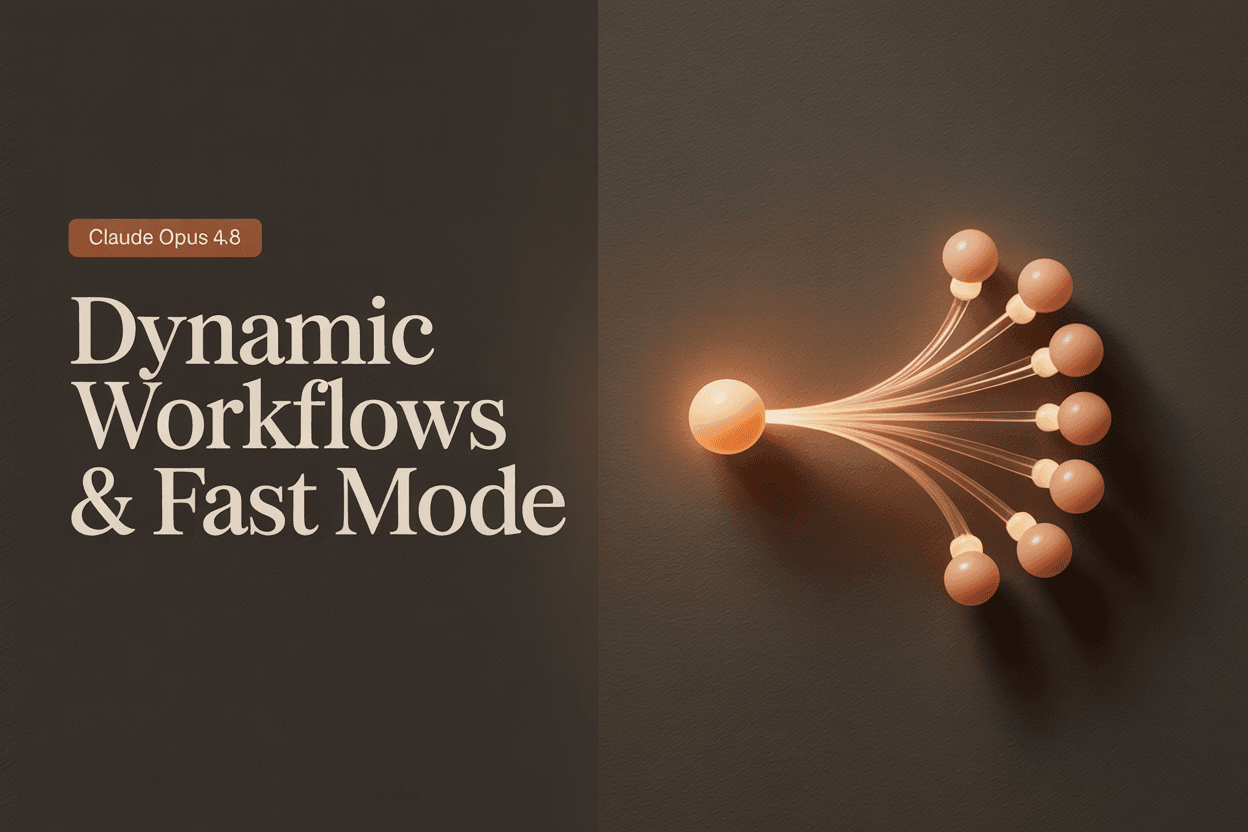
Media HubTools SpotlightClaude Opus 4.8: Dynamic Workflows & Faster AI
29 May 20265 min read

Claude Opus 4.8: Dynamic Workflows & Faster AI

Claude Opus 4.8: Dynamic Workflows & Faster AI

🎯 Quick Impact Summary

Anthropichas launched Claude Opus 4.8, introducing dynamic workflows and a more affordable fast mode that fundamentally changes how teams build AI-powered automation. The new system supports up to 1,000 subagents within workflows, enabling complex multi-step processes at scale. This release represents a significant leap in making enterprise-grade AI orchestration accessible to organizations of all sizes.

What's New in Claude Opus 4.8

Claude Opus 4.8 brings substantial improvements to AI workflow management and cost efficiency. The flagship update centers on dynamic workflows that adapt in real-time, alongside pricing reductions that make fast inference more accessible.

  • Dynamic Workflows: Workflows now adapt and branch based on runtime conditions, allowing processes to respond intelligently to data and outcomes rather than following rigid predetermined paths
  • Cheaper Fast Mode: The new fast inference tier reduces costs significantly while maintaining speed, making rapid iteration and high-volume processing more economical for teams
  • Subagent Scaling: Support for up to 1,000 subagents within a single workflow enables complex multi-step automation that was previously impractical or prohibitively expensive
  • Claude Code Integration: Dynamic workflows integrate seamlessly with Claude Code, now in research preview, enabling developers to build sophisticated applications without extensive coding overhead
  • Improved Orchestration: Enhanced agent coordination allows multiple AI processes to work in parallel or sequence, with better context sharing and state management across subagents
  • Research Preview Status: The system is available in research preview, giving early adopters access to cutting-edge capabilities while Anthropic refines the platform based on real-world usage

Technical Specifications

Claude Opus 4.8 is built on advanced architecture designed for enterprise-scale AI automation and orchestration.

  • Subagent Capacity: Supports up to 1,000 concurrent or sequential subagents within a single workflow, enabling complex branching and parallel execution patterns
  • Dynamic Execution Engine: Runtime-adaptive workflow engine that evaluates conditions and adjusts execution paths based on intermediate results and data states
  • Fast Mode Architecture: Optimized inference pipeline that reduces latency while maintaining accuracy, with cost reductions compared to previous fast inference tiers
  • Integration Framework: Native compatibility with Claude Code and existing Anthropic API infrastructure, supporting REST and SDK-based integrations
  • State Management: Enhanced context preservation across subagent handoffs, allowing information to flow seamlessly through multi-step workflows without degradation

Official Benefits

  • Cost Reduction: Cheaper fast mode significantly lowers per-token costs for high-volume inference and rapid iteration cycles
  • Workflow Flexibility: Dynamic workflows eliminate the need for rigid, pre-planned automation sequences, adapting to real-time conditions and data variations
  • Scalability: Support for 1,000 subagents enables organizations to build enterprise-grade automation without architectural limitations
  • Development Speed: Claude Code integration reduces time-to-deployment for complex AI applications, lowering barriers for teams without extensive AI expertise
  • Operational Efficiency: Parallel subagent execution reduces total workflow runtime, improving throughput for batch processing and real-time applications

Real-World Translation

What Each Feature Actually Means:

  • Dynamic Workflows: Instead of building separate workflows for different scenarios, you create one intelligent workflow that automatically chooses the right path. For example, a customer support system can route urgent issues to human agents while handling routine questions with AI, all within a single workflow
  • Cheaper Fast Mode: Your team can now run more experiments and iterations without watching costs spiral. A data analysis team processing thousands of documents can afford to run multiple passes for quality assurance
  • 1,000 Subagents: Complex processes that previously required expensive orchestration platforms can now run natively. A financial reconciliation system can spawn hundreds of parallel agents to process different account categories simultaneously
  • Claude Code Integration: Non-engineers can build sophisticated applications through natural language prompts rather than writing boilerplate code. A marketing team can create a campaign optimization system without touching a single line of Python
  • Better State Management: Information flows cleanly between steps without repetition or context loss. A research workflow can gather data through one agent, analyze it with another, and generate reports with a third, with each step building on previous results

Before vs After

Before

Teams building AI automation faced rigid workflow constraints, expensive fast inference pricing that limited experimentation, and architectural ceilings that prevented scaling beyond dozens of parallel processes. Complex multi-step automation required custom development or expensive third-party orchestration platforms, making enterprise AI automation inaccessible to smaller organizations.

After

Claude Opus 4.8 enables adaptive workflows that respond to real-time conditions, affordable fast mode that encourages experimentation, and native support for massive parallelization through 1,000 subagents. Teams can now build sophisticated, scalable AI automation directly within Claude without external dependencies or prohibitive costs.

📈 Expected Impact: Organizations can reduce AI automation costs by 30-50% while simultaneously increasing workflow complexity and execution speed by 2-3x.

Job Relevance Analysis

AI Researcher

HIGH Impact
  • Use Case: AI researchers use dynamic workflows to experiment with different model orchestration patterns, testing how multiple agents collaborate on complex reasoning tasks and comparing outcomes across workflow configurations
  • Key Benefit: The cheaper fast mode enables rapid experimentation and iteration without budget constraints, allowing researchers to test hundreds of workflow variations to identify optimal agent coordination strategies
  • Workflow Integration: Researchers can prototype novel multi-agent architectures directly in Claude, observing how 1,000 subagents coordinate on tasks like literature synthesis, data analysis, and hypothesis generation
  • Skill Development: Working with dynamic workflows develops expertise in prompt engineering, agent design, and distributed reasoning systems that are increasingly valuable in AI research
  • Research Applications: Ideal for studying emergent behaviors in large-scale agent systems, testing scaling laws for multi-agent collaboration, and developing new orchestration patterns
AI Researcher

Advance innovation with AI tools for academic research, data analysis, knowledge representation, decision-making, and AI-powered chatbots.

6,692 Tools
AI Researcher

3D Modeler

MEDIUM Impact
  • Use Case: 3D modelers leverage Claude Opus 4.8 to automate asset generation workflows, using multiple subagents to handle texture generation, mesh optimization, and metadata creation in parallel
  • Key Benefit: Dynamic workflows enable intelligent asset pipelines that adapt based on model complexity, automatically routing simple assets through fast processing and complex models through detailed analysis
  • Workflow Integration: Modelers can create workflows that generate variations of 3D assets, automatically test them for compatibility, and optimize them for different platforms without manual intervention
  • Skill Development: Learning to design AI-assisted creative workflows builds valuable skills in automation and AI collaboration that complement traditional 3D modeling expertise
  • Practical Example: A game studio can use 1,000 subagents to generate and optimize thousands of environmental assets simultaneously, with dynamic workflows adjusting quality settings based on asset type and platform requirements
3D Modeler

Create beautiful 3D renders in minutes with AI tools for 3D design, characters, animation, and VR.

2,644 Tools
3D Modeler

Automation Engineer

HIGH Impact
  • Use Case: Automation engineers build enterprise-scale workflows using dynamic branching to handle exceptions, parallel processing with subagents for distributed tasks, and intelligent routing based on data conditions
  • Key Benefit: Support for 1,000 subagents eliminates architectural constraints that previously required expensive third-party orchestration tools, enabling complex automation directly within Claude
  • Workflow Integration: Engineers can design workflows that scale from dozens to thousands of parallel processes, with dynamic adaptation ensuring optimal resource utilization and cost efficiency
  • Skill Development: Mastering Claude Opus 4.8 workflows develops expertise in distributed systems, agent coordination, and low-code automation that's increasingly central to modern DevOps and automation roles
  • Real-World Scenario: An automation engineer can build a data processing pipeline that spawns 500 parallel agents to process different data sources, with dynamic workflows automatically handling failures and retries
Automation Engineer

Increase your productivity with these AI solutions for automation, quality assurance, integration, collaboration, and code creation.

5,288 Tools
Automation Engineer

Getting Started

How to Access

  • Research Preview Enrollment: Visit Anthropic's Claude platform and request access to the research preview for dynamic workflows and Claude Code
  • API Integration: Authenticate using your Anthropic API key and update your SDK to the latest version supporting Claude Opus 4.8
  • Workspace Setup: Create or configure a workspace in Claude to begin building workflows with the new dynamic execution engine
  • Documentation Review: Consult Anthropic's updated documentation for workflow syntax, subagent configuration, and best practices for multi-agent orchestration

Quick Start Guide

For Beginners:

  1. Create a simple two-step workflow using Claude's visual workflow builder, starting with a data input step followed by an analysis step
  2. Test the workflow with sample data to understand how information flows between steps and how to configure step outputs
  3. Add a conditional branch that routes results to different paths based on a simple condition, observing how dynamic workflows adapt
  4. Deploy your workflow and monitor execution to see real-time performance metrics and cost tracking

For Power Users:

  1. Design a complex workflow architecture with 50+ subagents, configuring parallel execution groups and sequential dependencies to optimize throughput
  2. Implement dynamic branching logic that evaluates intermediate results and adjusts execution paths, including error handling and retry strategies
  3. Integrate external data sources and APIs into your workflow, using subagents to fetch, transform, and aggregate data from multiple systems
  4. Optimize for cost by strategically using fast mode for high-volume steps and standard mode for complex reasoning, monitoring token usage across subagents
  5. Implement monitoring and logging to track subagent performance, identify bottlenecks, and refine workflow efficiency over time

Pro Tips

  • Start Small, Scale Gradually: Begin with 5-10 subagents to understand coordination patterns, then gradually increase complexity as you master workflow design and debugging
  • Leverage Fast Mode Strategically: Use cheaper fast mode for high-volume, straightforward tasks like data formatting and filtering, reserving standard mode for complex reasoning and decision-making
  • Monitor Cost and Performance: Track token usage and execution time across subagents to identify optimization opportunities and ensure workflows remain cost-effective as they scale
  • Test Dynamic Branches Thoroughly: Validate that your conditional logic routes to the correct paths under various data conditions before deploying to production

Getting Started

FAQ

Related Topics

Claude Opus 4.8AI workflow managementdynamic workflowsAI agentslow code AI automation

Table of contents

What's New in Claude Opus 4.8Technical SpecificationsOfficial BenefitsReal-World TranslationJob Relevance AnalysisGetting StartedGetting StartedFAQ
Impact LevelHIGH
Update ReleasedMay 28, 2026

Best for

AI Researcher3D ModelerAutomation Engineer

Related Use Cases

AI Creativity ToolsAI Productivity ToolsAI Art Creation Tools

Related Articles

Stable Audio 3 Review: Fast AI Audio Generation
Microsoft 365 Copilot Redesign: 2x Speed Boost
Perplexity Bumblebee: AI Supply Chain Security Scanner
All AI Spotlights

Editor's Pick Articles

Google Gemini App Update 2026: AI Chatbot Powerhouse
Notion AI Agents: Turn Your Workspace Into an AI Hub
Perplexity Personal Computer: AI Agents for Mac
All Articles
Special offer for AI Owners – 50% OFF Promotional Plans

Join Our Community

Get the earliest access to hand-picked content weekly for free.

Spam-free guaranteed! Only insights.

Follow Us on Socials

Don't Miss AI Topics

ai art generatorai voice generatorai text generatorai avatar generatorai designai writing assistantai audio generatorai content generatorai dubbingai graphic designai banner generatorai in dropshipping

AI Spotlights

Unleashing Today's trailblazer, this week's game-changers, and this month's legends in AI. Dive in and discover tools that matter.

All AI Spotlights
Stable Audio 3 Review: Fast AI Audio Generation
Stable Audio 3 Review: Fast AI Audio Generation

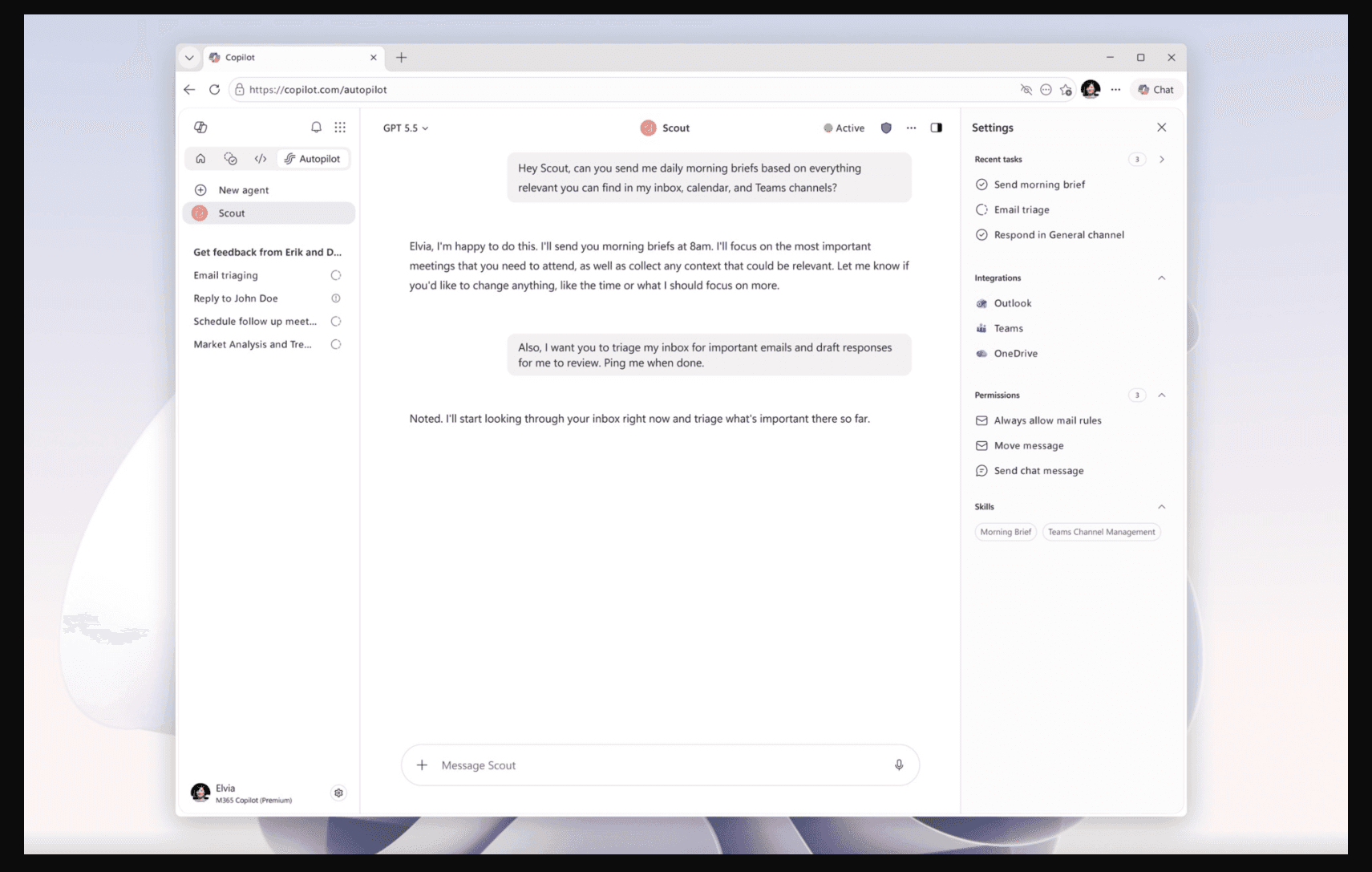
Microsoft 365 Copilot Redesign: 2x Speed Boost

Microsoft 365 Copilot Redesign: 2x Speed Boost

Perplexity Bumblebee: AI Supply Chain Security Scanner

Perplexity Bumblebee: AI Supply Chain Security Scanner

AWS OpenSearch Serverless Review: Enterprise Search Reimagined
AWS OpenSearch Serverless Review: Enterprise Search Reimagined

OSCAR: 2-Bit KV Cache Quantization for LLMs

OSCAR: 2-Bit KV Cache Quantization for LLMs

StepAudio 2.5 Realtime: AI Voice Model Review

StepAudio 2.5 Realtime: AI Voice Model Review

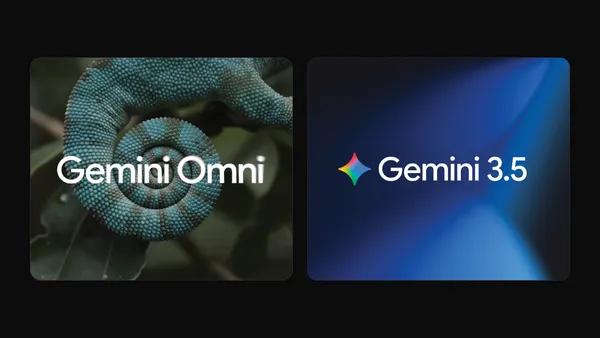
Google I/O 2026: Gemini Omni & AI Breakthroughs

Google I/O 2026: Gemini Omni & AI Breakthroughs

IrisGo Review: AI Desktop Buddy Learns Your Tasks

IrisGo Review: AI Desktop Buddy Learns Your Tasks

Clouted Review: AI Video Clipping for Viral Shorts

Clouted Review: AI Video Clipping for Viral Shorts

Qwen3.7-Max Review: 1M-Token Reasoning Agent

Qwen3.7-Max Review: 1M-Token Reasoning Agent

Cohere Command A+: 218B MoE Model Review

Cohere Command A+: 218B MoE Model Review

Gmail AI Inbox: Talk to Your Email with Gemini

Gmail AI Inbox: Talk to Your Email with Gemini

Google Antigravity 2.0: Agent-First AI Platform

Google Antigravity 2.0: Agent-First AI Platform

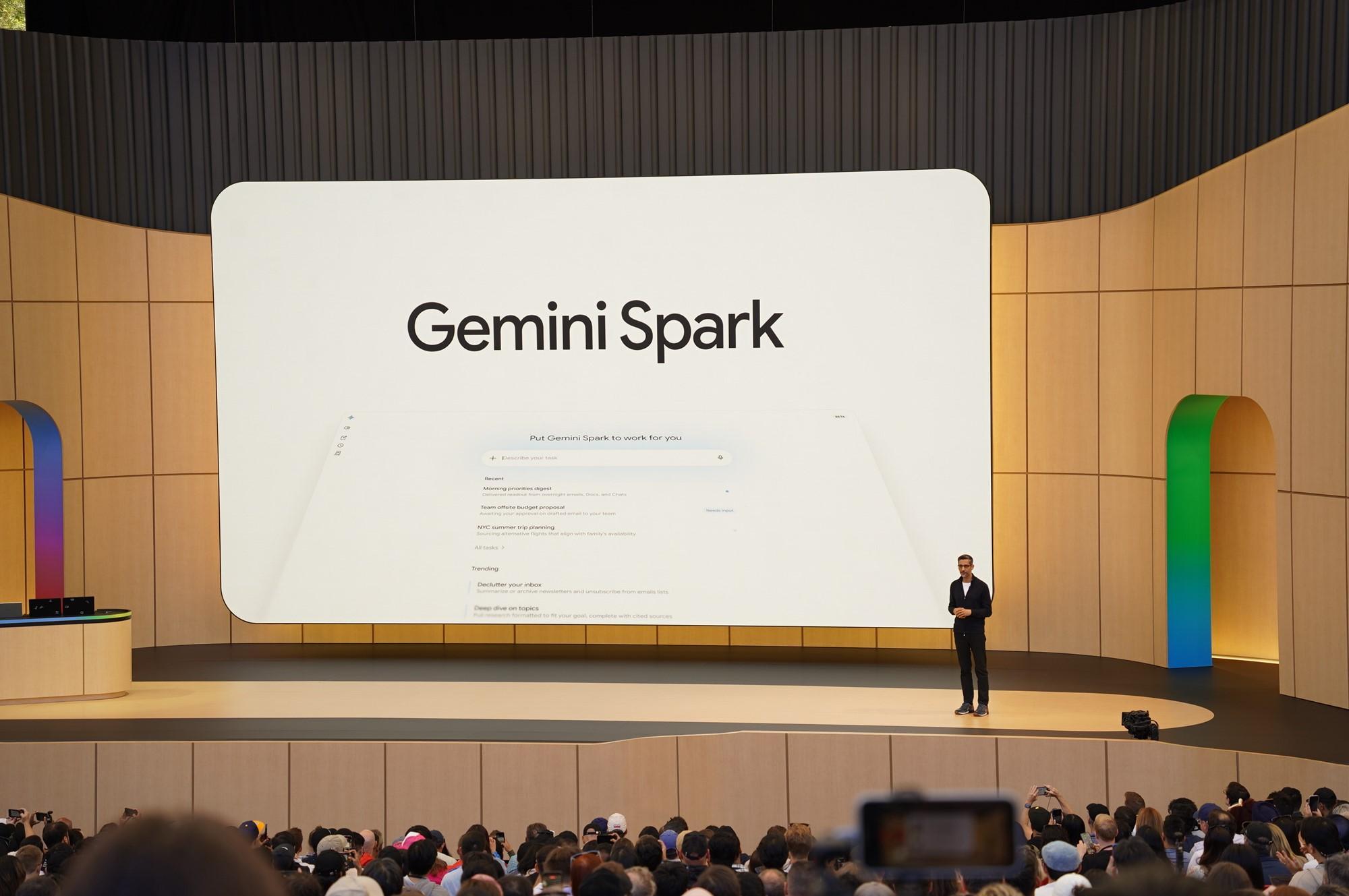
Gemini Spark Review: 24/7 AI Assistant with Gmail

Gemini Spark Review: 24/7 AI Assistant with Gmail

Google Gemini App Update 2026: AI Chatbot Powerhouse

Google Gemini App Update 2026: AI Chatbot Powerhouse

SandboxAQ's Claude Integration: Drug Discovery for Everyone

SandboxAQ's Claude Integration: Drug Discovery for Everyone

Notion AI Agents: Turn Your Workspace Into an AI Hub

Notion AI Agents: Turn Your Workspace Into an AI Hub

Edge Copilot Update: AI Now Reads All Your Tabs

Edge Copilot Update: AI Now Reads All Your Tabs

GLiGuard Review: 300M Safety Model Beats Larger Competitors

GLiGuard Review: 300M Safety Model Beats Larger Competitors

You Might Like These Latest News

All AI News

Stay informed with the latest AI news, breakthroughs, trends, and updates shaping the future of artificial intelligence.

DuckDuckGo Installs Surge 30% as Users Reject Google AI Search

May 29, 2026
DuckDuckGo Installs Surge 30% as Users Reject Google AI Search

OpenRouter Doubles Valuation to $1.3B

May 29, 2026
OpenRouter Doubles Valuation to $1.3B

Critical Starlette Vulnerability Threatens Millions of AI Agents

May 29, 2026
Critical Starlette Vulnerability Threatens Millions of AI Agents

Meta Launches Paid Subscriptions Across Instagram, Facebook, WhatsApp

May 29, 2026
Meta Launches Paid Subscriptions Across Instagram, Facebook, WhatsApp

Anthropic Raises $65B, Approaches $1T Valuation

May 29, 2026
Anthropic Raises $65B, Approaches $1T Valuation

AI Coding Startup Reaches $26B Valuation

May 29, 2026
AI Coding Startup Reaches $26B Valuation

Asana Acquires StackAI to Expand No-Code AI Automation

May 29, 2026
Asana Acquires StackAI to Expand No-Code AI Automation

IBM and Red Hat Launch $5B Open Source Security Initiative

May 29, 2026
IBM and Red Hat Launch $5B Open Source Security Initiative

ClickUp Replaces Hundreds with AI Agents

May 26, 2026
ClickUp Replaces Hundreds with AI Agents
Tools of The Day

Tools of The Day

Discover the top AI tools handpicked daily by our editors to help you stay ahead with the latest and most innovative solutions.


10MAR
Adobe Illustrator
Adobe Illustrator
9MAR
Adobe Firefly
Adobe Firefly
8MAR
Adobe Sensei
Adobe Sensei
7MAR
Adobe Photoshop
Adobe Photoshop
6MAR
Adobe Firefly
Adobe Firefly
5MAR
Shap-E
Shap-E
4MAR
Point-E
Point-E

Explore AI Tools of The Day