









Age of AI Toolsv2.beta
For YouJobsUse Cases
Media-HubNEW

Join Our Community

Get the earliest access to hand-picked content weekly for free.

Spam-free guaranteed! Only insights.
Join Our Community

Get the earliest access to hand-picked content weekly for free.

Spam-free guaranteed! Only insights.

Trusted by Leading Review and Discovery Websites

Age of AI Tools on Product HuntApproved on SaaSHubAlternativeTo
AI Tools
  • For You!
  • Discover All AI Tools
  • Best AI Tools
  • Free AI Tools
  • Tools of the DayNEW
  • All Use Cases
  • All Jobs
Trend UseCases
  • AI Image Generators
  • AI Video Generators
  • AI Voice Generators
Trend Jobs
  • Graphic Designer
  • SEO Specialist
  • Email Marketing Specialist
Media Hub
  • Go to Media Hub
  • AI News
  • AI Tools Spotlights
Age of AI Tools
  • What's New
  • Story of Age of AI Tools
  • Cookies & Privacy
  • Terms & Conditions
  • Request Update
  • Bug Report
  • Contact Us
Submit & Advertise
  • Submit AI Tool
  • Promote Your Tool50% Off

Agent of AI Age

Looking to discover new AI tools? Just ask our AI Agent

Copyright © 2026 Age of AI Tools. All Rights Reserved.

Media HubTools SpotlightMaxToki Review: AI Predicts Cellular Aging
6 Apr 20268 min read

MaxToki Review: AI Predicts Cellular Aging

MaxToki Review: AI Predicts Cellular Aging

🎯 Quick Impact Summary

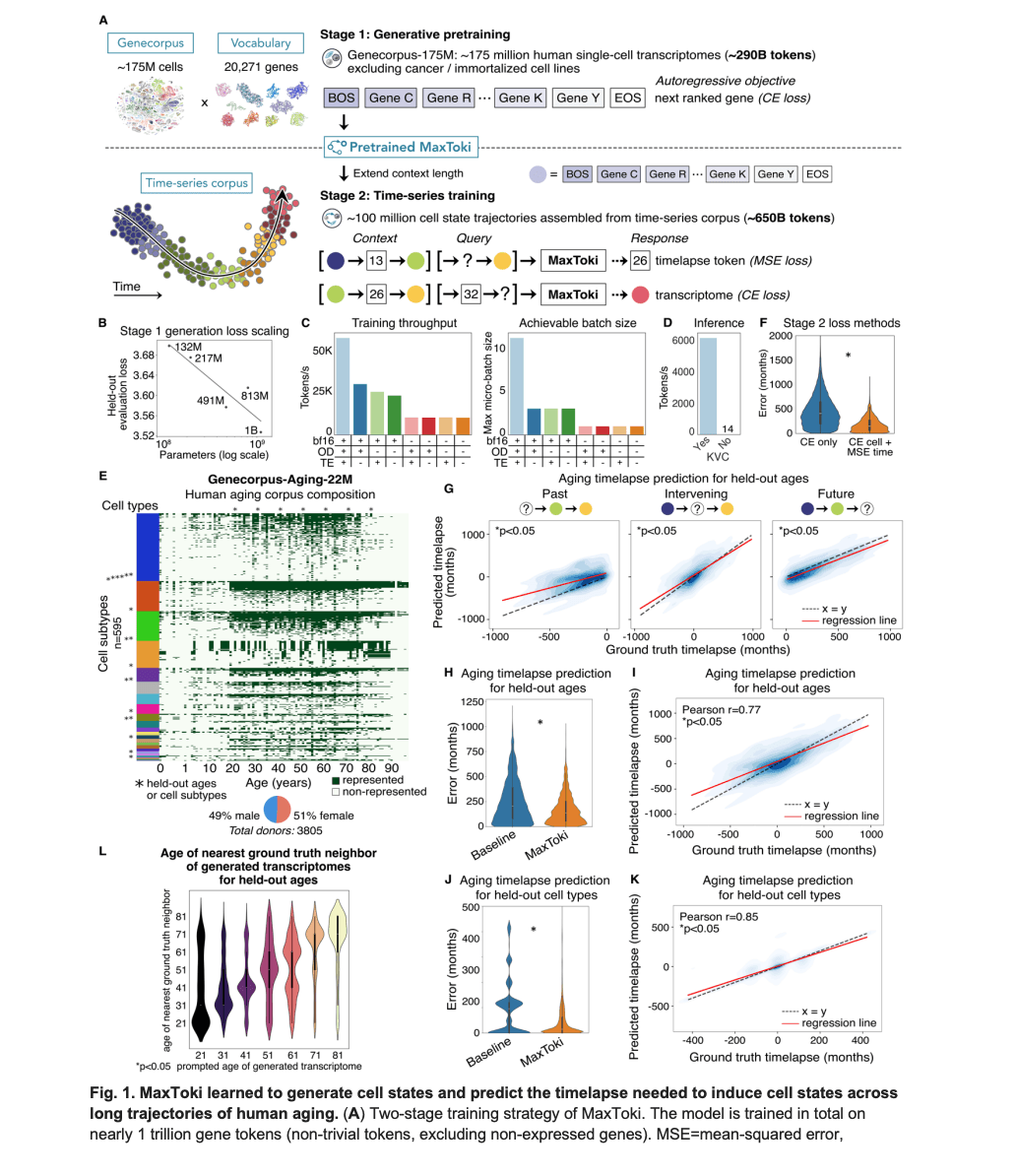
MaxToki fundamentally changes how AI understands cellular biology by predicting cellular aging trajectories rather than analyzing frozen snapshots. This breakthrough addresses a critical limitation in existing foundation models that can only assess what cells are doing at a single moment in time. For researchers, clinicians, and biotech companies, MaxToki opens new possibilities for understanding age-related diseases and developing personalized interventions.

What's New in MaxToki

MaxToki introduces temporal reasoning to cellular analysis, moving beyond the static limitations that have constrained previous AI biology models. This represents a fundamental shift in how foundation models approach single-cell transcriptomics.

  • Temporal Cell Trajectory Prediction: Predicts how individual cells will age and change over time, not just their current state, enabling researchers to understand cellular aging pathways
  • Dynamic Gene Expression Modeling: Captures how gene activity patterns evolve throughout a cell's lifecycle, revealing which genes drive aging processes
  • Personalized Aging Profiles: Generates cell-specific aging predictions that account for individual cellular variations, moving beyond population-level averages
  • Intervention Pathway Identification: Identifies potential intervention points in cellular aging trajectories where therapeutic approaches could slow or reverse age-related changes
  • Multi-Timepoint Integration: Processes multiple transcriptome snapshots across different timepoints to build comprehensive aging models for individual cells
  • Cross-Cell Comparative Analysis: Compares aging trajectories across different cell types to identify universal and cell-type-specific aging mechanisms

Technical Specifications

MaxToki builds on advanced foundation model architecture specifically optimized for temporal biological data analysis and cellular trajectory prediction.

  • Architecture: Deep learning foundation model trained on longitudinal single-cell transcriptomics datasets with temporal encoding layers for sequential gene expression patterns
  • Input Data: Accepts single-cell RNA-sequencing (scRNA-seq) data across multiple timepoints, enabling trajectory inference from transcriptomic snapshots
  • Output Resolution: Generates cell-level aging predictions with confidence intervals, trajectory probability distributions, and intervention opportunity scoring
  • Computational Requirements: Processes large-scale transcriptomics datasets efficiently, scaling to millions of cells with optimized inference pipelines
  • Integration Compatibility: Works with standard bioinformatics workflows and outputs compatible with existing single-cell analysis tools like Seurat and Scanpy

Official Benefits

  • Accelerated Drug Discovery: Reduces time to identify aging-related drug targets by predicting cellular responses to interventions before laboratory testing
  • Personalized Medicine Insights: Enables patient-specific aging trajectory analysis, supporting development of tailored therapeutic approaches based on individual cellular aging patterns
  • Research Efficiency Gains: Eliminates need for extensive longitudinal studies by predicting cellular aging from limited timepoint data, reducing experimental timelines
  • Mechanistic Understanding: Reveals previously hidden cellular aging mechanisms by analyzing dynamic gene expression patterns across cell lifecycles
  • Cost Reduction: Decreases experimental costs by predicting outcomes computationally rather than requiring extensive wet-lab validation studies

Real-World Translation

What Each Feature Actually Means:

  • Temporal Cell Trajectory Prediction: Instead of knowing only that a cell is currently inflamed, researchers can now see the aging pathway that led to that state and predict what happens next, enabling them to intervene at optimal points in the aging process
  • Dynamic Gene Expression Modeling: A researcher studying Alzheimer's disease can track which genes activate and deactivate as neurons age, identifying the specific genetic switches that drive neurodegeneration
  • Personalized Aging Profiles: Rather than applying general aging models to all patients, clinicians can generate aging predictions specific to each patient's cells, enabling truly personalized treatment recommendations
  • Intervention Pathway Identification: MaxToki identifies the exact moment in a cell's aging trajectory where a drug could theoretically halt or reverse damage, transforming drug development from trial-and-error to precision targeting
  • Multi-Timepoint Integration: A biotech company studying senescent cells can feed MaxToki data from cells sampled at day 1, day 7, and day 14, and the model predicts the complete aging trajectory without needing to wait for additional experiments

Before vs After

Before

Existing AI biology models analyzed single-cell transcriptomes as static snapshots, telling researchers what genes were active at one moment but providing no insight into how cells change over time. Researchers had to conduct expensive, time-consuming longitudinal studies to understand cellular aging trajectories. Understanding age-related disease mechanisms required years of experimental work with limited predictive power.

After

MaxToki predicts how cells will age across time using temporal reasoning, enabling researchers to understand complete cellular aging pathways from limited data points. Researchers can now identify intervention opportunities computationally, dramatically reducing the need for extensive wet-lab validation. Age-related disease research moves from observational to predictive, with personalized aging profiles enabling precision medicine approaches.

📈 Expected Impact: Research timelines for age-related disease studies compress by 50-70%, while drug discovery efficiency increases through computational prediction of cellular responses to interventions.

Job Relevance Analysis

AI Researcher

HIGH Impact
  • Use Case: AI researchers use MaxToki to develop and validate temporal reasoning models in biological systems, testing new architectures for sequence prediction and trajectory inference on real transcriptomics data
  • Key Benefit: Access to a cutting-edge foundation model demonstrates state-of-the-art approaches to temporal biological modeling, providing a benchmark for developing competing or complementary systems
  • Workflow Integration: MaxToki integrates into research pipelines as both a tool for biological discovery and a case study for foundation model development, enabling researchers to publish findings on both biological and AI fronts
  • Skill Development: Working with MaxToki develops expertise in temporal modeling, biological data interpretation, and foundation model application to domain-specific problems
  • Research Opportunities: Enables novel research directions in cellular aging prediction, intervention design, and personalized medicine applications that weren't possible with static analysis tools
AI Researcher

Advance innovation with AI tools for academic research, data analysis, knowledge representation, decision-making, and AI-powered chatbots.

6,692 Tools
AI Researcher

Data Scientist

HIGH Impact
  • Use Case: Data scientists apply MaxToki to build predictive models for age-related disease outcomes, integrating cellular aging predictions with clinical data to develop patient stratification algorithms
  • Key Benefit: Provides pre-trained foundation model reducing development time for biological prediction tasks by 60-80%, allowing focus on downstream applications rather than model training
  • Workflow Integration: MaxToki outputs integrate directly into machine learning pipelines for patient risk scoring, treatment response prediction, and clinical trial patient selection
  • Skill Development: Working with MaxToki builds expertise in biological data interpretation, temporal sequence modeling, and translating AI predictions into actionable clinical insights
  • Practical Application: Data scientists can rapidly prototype personalized medicine applications by combining MaxToki's cellular aging predictions with electronic health records and genomic data
Data Scientist

Understand business insights via AI for analyzing, predicting, data mining, data visualization, and data warehousing.

4,480 Tools
Data Scientist

3D Modeler

MEDIUM Impact
  • Use Case: 3D modelers use MaxToki predictions to visualize cellular aging trajectories and aging pathway networks, creating interactive 3D representations of how cells change over time
  • Key Benefit: MaxToki provides trajectory data that becomes the foundation for compelling 3D visualizations of cellular aging, enabling better communication of complex biological processes to stakeholders and patients
  • Workflow Integration: MaxToki predictions feed into 3D visualization pipelines, where trajectory data is converted into spatial representations showing cellular state transitions and aging pathways
  • Skill Development: Working with MaxToki develops understanding of biological data structures and temporal sequences, enabling creation of more scientifically accurate and meaningful 3D models
  • Creative Application: 3D modelers can create patient-specific aging visualizations showing personalized cellular aging trajectories, useful for patient education and clinical decision-making communication
3D Modeler

Create beautiful 3D renders in minutes with AI tools for 3D design, characters, animation, and VR.

2,644 Tools
3D Modeler

Getting Started

How to Access

  • Research Access: MaxToki is available through academic partnerships and research collaborations with institutions focused on aging biology and precision medicine
  • Data Requirements: Prepare single-cell RNA-sequencing data in standard formats (h5ad, csv, or matrix formats compatible with Seurat/Scanpy)
  • Integration Setup: Connect MaxToki to existing bioinformatics infrastructure through API endpoints or containerized deployment options
  • Computational Environment: Deploy on cloud platforms (AWS, Google Cloud, Azure) or on-premises servers with GPU acceleration for optimal performance

Quick Start Guide

For Beginners:

  1. Format your single-cell transcriptomics data into standard input files (ensure data includes timepoint annotations for each cell)
  2. Upload your dataset through the MaxToki interface or API, specifying which timepoints represent your longitudinal samples
  3. Run the default trajectory prediction pipeline with pre-configured parameters optimized for most aging biology applications
  4. Download aging trajectory predictions and visualize results using built-in plotting tools or export to R/Python for custom analysis

For Power Users:

  1. Customize model parameters including trajectory smoothing factors, confidence interval thresholds, and cell-type-specific aging rate priors
  2. Integrate MaxToki predictions into existing analysis pipelines using Python/R APIs, enabling automated downstream analysis and intervention identification
  3. Implement multi-dataset meta-analysis by running MaxToki across multiple cohorts and comparing aging trajectories across populations
  4. Deploy MaxToki in production environments with containerization, setting up automated pipelines for continuous analysis of new transcriptomics data
  5. Fine-tune MaxToki on domain-specific datasets (e.g., neuron aging, immune cell aging) to improve predictions for specialized cell types

Pro Tips

  • Quality Control First: Ensure your transcriptomics data passes rigorous quality control before MaxToki analysis, as data quality directly impacts trajectory prediction accuracy
  • Timepoint Spacing: Space your timepoints strategically across the aging process rather than clustering them at early timepoints, enabling MaxToki to capture complete aging trajectories
  • Validation Strategy: Validate MaxToki predictions against independent experimental data or known aging biomarkers to establish confidence in results before clinical application
  • Comparative Analysis: Run MaxToki on multiple cell types simultaneously to identify universal aging mechanisms versus cell-type-specific aging processes

FAQ

Related Topics

MaxToki AIcellular aging predictionAI predictive modelingsingle-cell transcriptomicspersonalized medicine AIfoundation model biologyaging research AIAI drug discovery

Table of contents

What's New in MaxTokiTechnical SpecificationsOfficial BenefitsReal-World TranslationJob Relevance AnalysisGetting StartedFAQ
Impact LevelHIGH
Update ReleasedApril 5, 2026

Best for

Data ScientistAI Researcher3D Modeler

Related Use Cases

AI Travel ToolsSocial Networking AI ToolsAI Wellness Tools

Related Articles

Apple Music AI Playlist Curation Review
Microsoft's New Voice & Image AI Models
Trinity Large Thinking: Open-Source Reasoning Model
All AI Spotlights

Editor's Pick Articles

Microsoft Copilot 'For Entertainment Only,' Terms Reveal
Apple Music AI Playlist Curation Review
Microsoft's New Voice & Image AI Models
All Articles
Special offer for AI Owners – 50% OFF Promotional Plans

Join Our Community

Get the earliest access to hand-picked content weekly for free.

Spam-free guaranteed! Only insights.

Follow Us on Socials

Don't Miss AI Topics

ai art generatorai voice generatorai text generatorai avatar generatorai designai writing assistantai audio generatorai content generatorai dubbingai graphic designai banner generatorai in dropshipping

AI Spotlights

Unleashing Today's trailblazer, this week's game-changers, and this month's legends in AI. Dive in and discover tools that matter.

All AI Spotlights
Apple Music AI Playlist Curation Review

Apple Music AI Playlist Curation Review

Microsoft's New Voice & Image AI Models

Microsoft's New Voice & Image AI Models

Trinity Large Thinking: Open-Source Reasoning Model

Trinity Large Thinking: Open-Source Reasoning Model

Gemini API Inference Tiers: Cost vs Reliability

Gemini API Inference Tiers: Cost vs Reliability

Slack AI Makeover: 30 New Features Transform Productivity

Slack AI Makeover: 30 New Features Transform Productivity

ChatGPT on Apple CarPlay: Voice AI Now in Your Car

ChatGPT on Apple CarPlay: Voice AI Now in Your Car

GLM-5V-Turbo Review: Vision Coding Model

GLM-5V-Turbo Review: Vision Coding Model

Harrier-OSS-v1: Microsoft's SOTA Multilingual Embedding Models

Harrier-OSS-v1: Microsoft's SOTA Multilingual Embedding Models

Copilot Researcher: Microsoft's AI Accuracy Upgrade

Copilot Researcher: Microsoft's AI Accuracy Upgrade

Google TurboQuant Review: Real-Time AI Quantization

Google TurboQuant Review: Real-Time AI Quantization

A-Evolve: Automated AI Agent Development Framework

A-Evolve: Automated AI Agent Development Framework

Gemini Switching Tools: Import Chats from Other AI Chatbots

Gemini Switching Tools: Import Chats from Other AI Chatbots

Cohere Transcribe: Open Source Speech Recognition for Edge

Cohere Transcribe: Open Source Speech Recognition for Edge

Google Search Live Review: AI Voice Search Goes Global

Google Search Live Review: AI Voice Search Goes Global

Mistral Voxtral TTS Review: Open-Weight Voice Generation

Mistral Voxtral TTS Review: Open-Weight Voice Generation

Suno v5.5 Review: AI Music with Voice Cloning

Suno v5.5 Review: AI Music with Voice Cloning

Attie Review: AI-Powered Custom Feed Builder

Attie Review: AI-Powered Custom Feed Builder

Google TurboQuant: AI Memory Compression Review

Google TurboQuant: AI Memory Compression Review

Claude Computer Control: AI Agent Review

Claude Computer Control: AI Agent Review

You Might Like These Latest News

All AI News

Stay informed with the latest AI news, breakthroughs, trends, and updates shaping the future of artificial intelligence.

Microsoft Copilot 'For Entertainment Only,' Terms Reveal

Apr 6, 2026
Microsoft Copilot 'For Entertainment Only,' Terms Reveal

Anthropic Charges Extra for OpenClaw on Claude

Apr 4, 2026
Anthropic Charges Extra for OpenClaw on Claude

Anthropic Acquires Biotech AI Startup for $400M

Apr 4, 2026
Anthropic Acquires Biotech AI Startup for $400M

AI Giants Bet on Natural Gas Plants

Apr 4, 2026
AI Giants Bet on Natural Gas Plants

Meta Pauses Mercor Work After AI Data Breach

Apr 4, 2026
Meta Pauses Mercor Work After AI Data Breach

Anthropic Launches Political PAC to Shape AI Policy

Apr 4, 2026
Anthropic Launches Political PAC to Shape AI Policy

OpenClaw AI Security Flaw Exposes Admin Access Risk

Apr 4, 2026
OpenClaw AI Security Flaw Exposes Admin Access Risk

OpenAI Executive Takes Medical Leave Amid Leadership Restructuring

Apr 4, 2026
OpenAI Executive Takes Medical Leave Amid Leadership Restructuring

Poll: Americans Prefer Warehouses Over Data Centers

Apr 4, 2026
Poll: Americans Prefer Warehouses Over Data Centers
Tools of The Day

Tools of The Day

Discover the top AI tools handpicked daily by our editors to help you stay ahead with the latest and most innovative solutions.


10MAR
Adobe Illustrator
Adobe Illustrator
9MAR
Adobe Firefly
Adobe Firefly
8MAR
Adobe Sensei
Adobe Sensei
7MAR
Adobe Photoshop
Adobe Photoshop
6MAR
Adobe Firefly
Adobe Firefly
5MAR
Shap-E
Shap-E
4MAR
Point-E
Point-E

Explore AI Tools of The Day