Join Our Community










Get the earliest access to hand-picked content weekly for free.
Spam-free guaranteed! Only insights.
Join Our Community
Get the earliest access to hand-picked content weekly for free.
Spam-free guaranteed! Only insights.
🎯 Quick Impact Summary
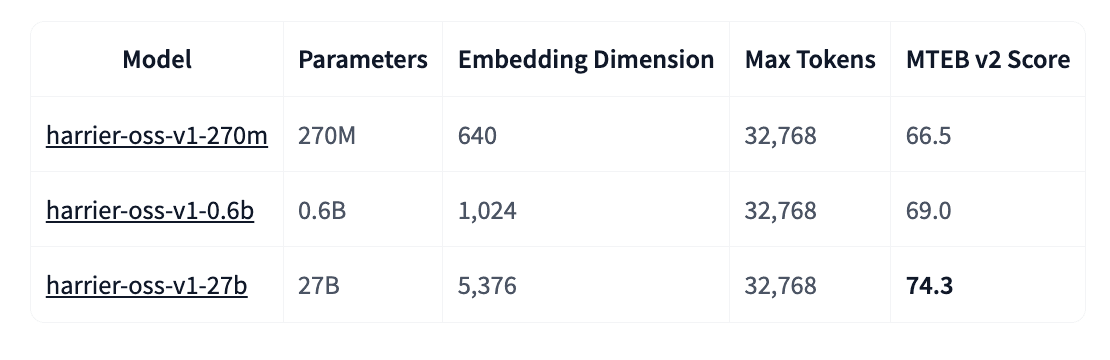
Microsoft AI has released Harrier-OSS-v1, a groundbreaking family of multilingual embedding models that achieve state-of-the-art performance on the Multilingual MTEB v2 benchmark. With three distinct model sizes ranging from 270M to 27B parameters, these open-source models enable developers to build multilingual AI applications with unprecedented semantic understanding across languages. This release represents a significant leap forward in making enterprise-grade multilingual AI accessible to organizations worldwide.
Microsoft's latest embedding model family introduces three carefully scaled options designed to balance performance with computational efficiency. Each model delivers state-of-the-art semantic understanding while maintaining practical deployment flexibility.
Harrier-OSS-v1 models are engineered for production-grade multilingual NLP applications with carefully optimized architectures.
What Each Feature Actually Means:
Before
Organizations relied on English-centric embedding models or maintained separate language-specific models for each target language. This approach created complexity in deployment, increased computational costs, and often resulted in lower semantic quality for non-English languages. Multilingual semantic search and similarity matching remained challenging and expensive to implement at scale.
After
With Harrier-OSS-v1, teams can deploy a single unified multilingual model that delivers state-of-the-art semantic understanding across 100+ languages. The flexible model sizing allows cost-effective deployment from edge devices to high-performance servers, while open-source availability eliminates licensing barriers and enables custom fine-tuning.
📈 Expected Impact: Organizations can reduce multilingual AI infrastructure costs by 40-60% while improving semantic search accuracy by 15-25% compared to previous generation models.
For Beginners:
For Power Users:
FAQ
AI Spotlights
Unleashing Today's trailblazer, this week's game-changers, and this month's legends in AI. Dive in and discover tools that matter.

Claude Fable 5 Review: Mythos Power with Safety
Gemma 4 12B Review: Multimodal AI on Your Laptop
Google Dreambeans Review: AI Cartoon Stories
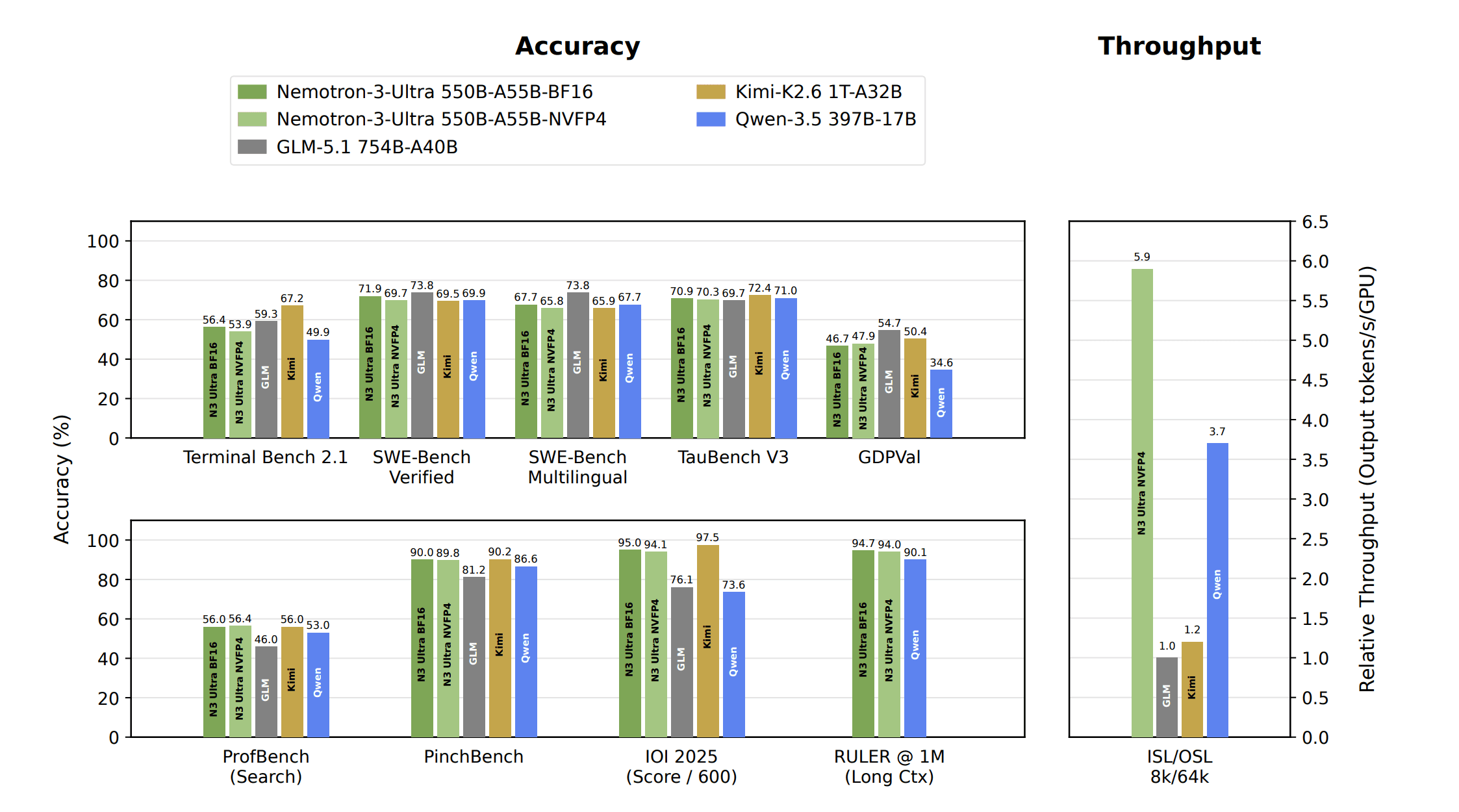
NVIDIA Nemotron 3 Ultra: 550B MoE LLM Review
Meta AI Agent for Enterprises: Global Launch
Gemini Omni and 3.5: Google's Latest AI Models
Step 3.7 Flash Review: 198B MoE Vision-Language Model

Gemini Spark Review: Google's AI Agent Goes Personal
Microsoft Agent Governance Toolkit Review
Gemini Spark AI Agent Review: Always-On Automation
MAI-Thinking-1 Review: Microsoft's Advanced Reasoning AI
Microsoft Scout Review: OpenClaw-Powered AI Assistant
Microsoft MDASH Review: 100+ AI Agents for Threat Hunting

Google Phone App Fake Call Detection Review
Stable Audio 3 Review: Fast AI Audio Generation
Claude Opus 4.8: Dynamic Workflows & Faster AI
Microsoft 365 Copilot Redesign: 2x Speed Boost

Perplexity Bumblebee: AI Supply Chain Security Scanner

AWS OpenSearch Serverless Review: Enterprise Search Reimagined
OSCAR: 2-Bit KV Cache Quantization for LLMs
You Might Like These Latest News
All AI NewsStay informed with the latest AI news, breakthroughs, trends, and updates shaping the future of artificial intelligence.
Microsoft Patches Zero-Day After Researcher Disclosure
Jun 10, 2026
NVIDIA GPUs Power Apple's Private Cloud Compute Expansion
Jun 10, 2026
GM Launches Vehicle-to-Grid Tech to Power AI Data Centers
Jun 10, 2026
Alphabet's $85B AI Investment Signals Major Shift
Jun 5, 2026
AI Cognitive Fatigue: Work Smarter, Not Harder
Jun 5, 2026
Nvidia Unveils Physical AI Research with Cosmos 3
Jun 5, 2026
Airbnb CEO Launches AI Lab to Build Custom LLMs
Jun 5, 2026
Anthropic's IPO Filing Balances Growth With Responsible AI
Jun 3, 2026
Meta's AI Chatbot Exploited to Hijack Instagram Accounts
Jun 3, 2026

Discover the top AI tools handpicked daily by our editors to help you stay ahead with the latest and most innovative solutions.