Join Our Community










Get the earliest access to hand-picked content weekly for free.
Spam-free guaranteed! Only insights.
Join Our Community
Get the earliest access to hand-picked content weekly for free.
Spam-free guaranteed! Only insights.

🎯 Quick Impact Summary
* EdgeLake Stage 2 is a free, open-source platform under LF Edge that brings cloud-native orchestration to edge devices, solving latency and bandwidth issues.
* It is best suited for technical teams comfortable with Kubernetes and containerization, offering high flexibility and hardware interoperability.
* Key applications include real-time AI inference in manufacturing, retail analytics, and smart city infrastructure.
* While the software is free, users should budget for hardware and potential commercial support for enterprise-grade deployments.
* Compared to proprietary alternatives like Azure IoT Edge, EdgeLake offers greater customization and no vendor lock-in but requires a higher technical skill set to implement.
In the rapidly evolving landscape of artificial intelligence and edge computing, the demand for efficient, decentralized data processing has never been higher. EdgeLake Stage 2 represents a significant milestone within the LF Edge open infrastructure framework, designed to bring cloud-native capabilities directly to the edge. This tool addresses the critical challenge of managing and analyzing vast amounts of data generated by IoT devices and edge nodes without relying solely on centralized cloud servers. It is primarily designed for DevOps engineers, IoT architects, and enterprises looking to deploy scalable AI models in distributed environments. By leveraging the power of LF Edge, EdgeLake offers a unified platform that enhances data locality, reduces latency, and ensures robust operational consistency across diverse hardware.
The core problem EdgeLake solves is the "cloud-to-edge bottleneck." As more data is generated at the edge, transmitting it all to the cloud for processing becomes expensive, slow, and often impractical due to bandwidth constraints. EdgeLake provides a framework for running containerized workloads and AI inference engines directly on edge devices. This capability is essential for real-time applications such as autonomous vehicles, smart manufacturing, and remote monitoring systems. The tool’s integration with the LF Edge ecosystem ensures compatibility with a wide range of open-source projects, fostering a collaborative environment for developers. Its primary benefit lies in its ability to standardize edge infrastructure, making it easier to deploy, manage, and update applications across thousands of distributed nodes.
EdgeLake Stage 2 introduces several robust features tailored for high-performance edge computing. One of its standout capabilities is distributed orchestration, which allows users to manage containerized applications across a fleet of edge nodes using a centralized control plane. This is particularly useful for deploying AI models that require consistent updates across multiple locations. For example, a retail chain can deploy a new inventory recognition model to all store cameras simultaneously without manual intervention.
Another critical feature is data synchronization and caching. EdgeLake ensures that data generated at the edge is efficiently stored and synchronized with the cloud or central data centers only when necessary. This reduces bandwidth usage and allows for offline operation, a vital requirement for remote industrial sites. The platform also supports multi-architecture compatibility, running on everything from resource-constrained microcontrollers to powerful edge servers. This flexibility is a significant competitive advantage over proprietary solutions that often lock users into specific hardware ecosystems.
Furthermore, EdgeLake integrates seamlessly with popular AI frameworks like TensorFlow Lite and ONNX Runtime, enabling developers to deploy pre-trained models directly to the edge. The tool also includes built-in security features such as secure boot and encrypted communications, addressing the heightened security concerns associated with distributed networks.
At its heart, EdgeLake Stage 2 is built on top of Project EVE (Edge Virtualization Engine), a key component of the LF Edge umbrella. Project EVE provides a virtualized environment that abstracts the underlying hardware, allowing applications to run consistently regardless of the specific edge device architecture. This is achieved through lightweight virtual machines (VMs) and containers, orchestrated by a Kubernetes-native interface.
The technology stack leverages Linux containers for application isolation and resource management. When a user deploys an application, EdgeLake packages it into a container image and pushes it to a registry. The edge nodes, running the EdgeLake agent, pull these images and execute them securely. The platform utilizes a declarative configuration model, where users define the desired state of their edge network (e.g., "run this AI model on these 50 devices"), and EdgeLake handles the execution and monitoring.
For data handling, EdgeLake employs a time-series database optimized for edge storage, allowing for local analytics before data is aggregated. This local processing capability is powered by edge-native AI inference engines that utilize hardware accelerators like GPUs or NPUs if available. The architecture is designed to be modular, meaning users can pick and choose the components they need, such as networking, storage, or specific AI runtime environments.
EdgeLake Stage 2 is versatile, finding applications across various industries. In Smart Manufacturing, it enables predictive maintenance by running anomaly detection algorithms directly on factory floor sensors. This allows for immediate shutdown of machinery if a fault is detected, preventing costly damage and downtime without waiting for cloud round-trips.
In the Retail sector, EdgeLake facilitates real-time inventory management and customer analytics. Cameras equipped with computer vision models can track stock levels and customer flow locally, sending only summarized insights to the cloud. This preserves bandwidth and ensures privacy, as raw video footage does not leave the premises.
Another prominent use case is in Smart Cities, particularly for traffic management systems. EdgeLake can process video feeds from traffic lights to optimize signal timing based on real-time congestion levels. By processing this data at the edge, the system can react instantly to changing traffic conditions, reducing congestion and emissions. For Energy and Utilities, EdgeLake supports remote monitoring of grid infrastructure, analyzing sensor data to predict equipment failures in substations located in remote areas with limited connectivity.
As an open-source project under the Linux Foundation, EdgeLake Stage 2 is free to use. There are no licensing fees associated with the core software. This open-source nature is a major draw for organizations looking to avoid the high costs of proprietary edge computing platforms.
However, users should consider the operational costs. While the software is free, deploying and managing an EdgeLake infrastructure requires hardware (edge devices and servers) and engineering expertise. For enterprises seeking commercial support and simplified management, vendors like ZEDEDA or other LF Edge members offer managed services and enterprise distributions built on EdgeLake technology. These commercial offerings typically include 24/7 support, advanced security features, and graphical user interfaces for easier orchestration. Pricing for these managed services varies based on the number of nodes and the level of support required, often structured as a subscription model per node/month.
Pros: * Cost-Effective: Being open-source, it eliminates licensing fees. * Interoperability: Built on LF Edge standards, it avoids vendor lock-in and supports a wide range of hardware. * Scalability: Handles thousands of edge nodes efficiently through Kubernetes-native orchestration. * Community Support: Backed by the Linux Foundation and a vibrant open-source community.
Cons: * Steep Learning Curve: Requires familiarity with Kubernetes, Linux, and containerization technologies. * Limited Native UI: The core open-source project lacks a polished graphical interface, relying heavily on CLI or third-party tools. * Support Variability: Community support is available but may not match the SLAs of commercial vendors.
Who Should Use It? EdgeLake is ideal for IoT developers and system integrators building custom edge solutions. It is also well-suited for enterprises with existing Kubernetes expertise looking to extend their cloud-native practices to the edge. However, organizations lacking in-house DevOps talent or requiring a turnkey solution with a graphical interface might find commercial alternatives like AWS IoT Greengrass or Microsoft Azure IoT Edge more accessible, albeit at a higher cost.
FAQ
Related Topics
AI Spotlights
Unleashing Today's trailblazer, this week's game-changers, and this month's legends in AI. Dive in and discover tools that matter.

Claude Fable 5 Review: Mythos Power with Safety
Gemma 4 12B Review: Multimodal AI on Your Laptop

Google Dreambeans Review: AI Cartoon Stories
NVIDIA Nemotron 3 Ultra: 550B MoE LLM Review

Meta AI Agent for Enterprises: Global Launch

Gemini Omni and 3.5: Google's Latest AI Models

Step 3.7 Flash Review: 198B MoE Vision-Language Model

Gemini Spark Review: Google's AI Agent Goes Personal
Microsoft Agent Governance Toolkit Review
Gemini Spark AI Agent Review: Always-On Automation
MAI-Thinking-1 Review: Microsoft's Advanced Reasoning AI
Microsoft Scout Review: OpenClaw-Powered AI Assistant

Microsoft MDASH Review: 100+ AI Agents for Threat Hunting

Google Phone App Fake Call Detection Review
Stable Audio 3 Review: Fast AI Audio Generation

Claude Opus 4.8: Dynamic Workflows & Faster AI
Microsoft 365 Copilot Redesign: 2x Speed Boost

Perplexity Bumblebee: AI Supply Chain Security Scanner

AWS OpenSearch Serverless Review: Enterprise Search Reimagined
OSCAR: 2-Bit KV Cache Quantization for LLMs
You Might Like These Latest News
All AI NewsStay informed with the latest AI news, breakthroughs, trends, and updates shaping the future of artificial intelligence.
Microsoft Patches Zero-Day After Researcher Disclosure
Jun 10, 2026
NVIDIA GPUs Power Apple's Private Cloud Compute Expansion
Jun 10, 2026
GM Launches Vehicle-to-Grid Tech to Power AI Data Centers
Jun 10, 2026
Alphabet's $85B AI Investment Signals Major Shift
Jun 5, 2026
AI Cognitive Fatigue: Work Smarter, Not Harder
Jun 5, 2026
Nvidia Unveils Physical AI Research with Cosmos 3
Jun 5, 2026
Airbnb CEO Launches AI Lab to Build Custom LLMs
Jun 5, 2026
Anthropic's IPO Filing Balances Growth With Responsible AI
Jun 3, 2026
Meta's AI Chatbot Exploited to Hijack Instagram Accounts
Jun 3, 2026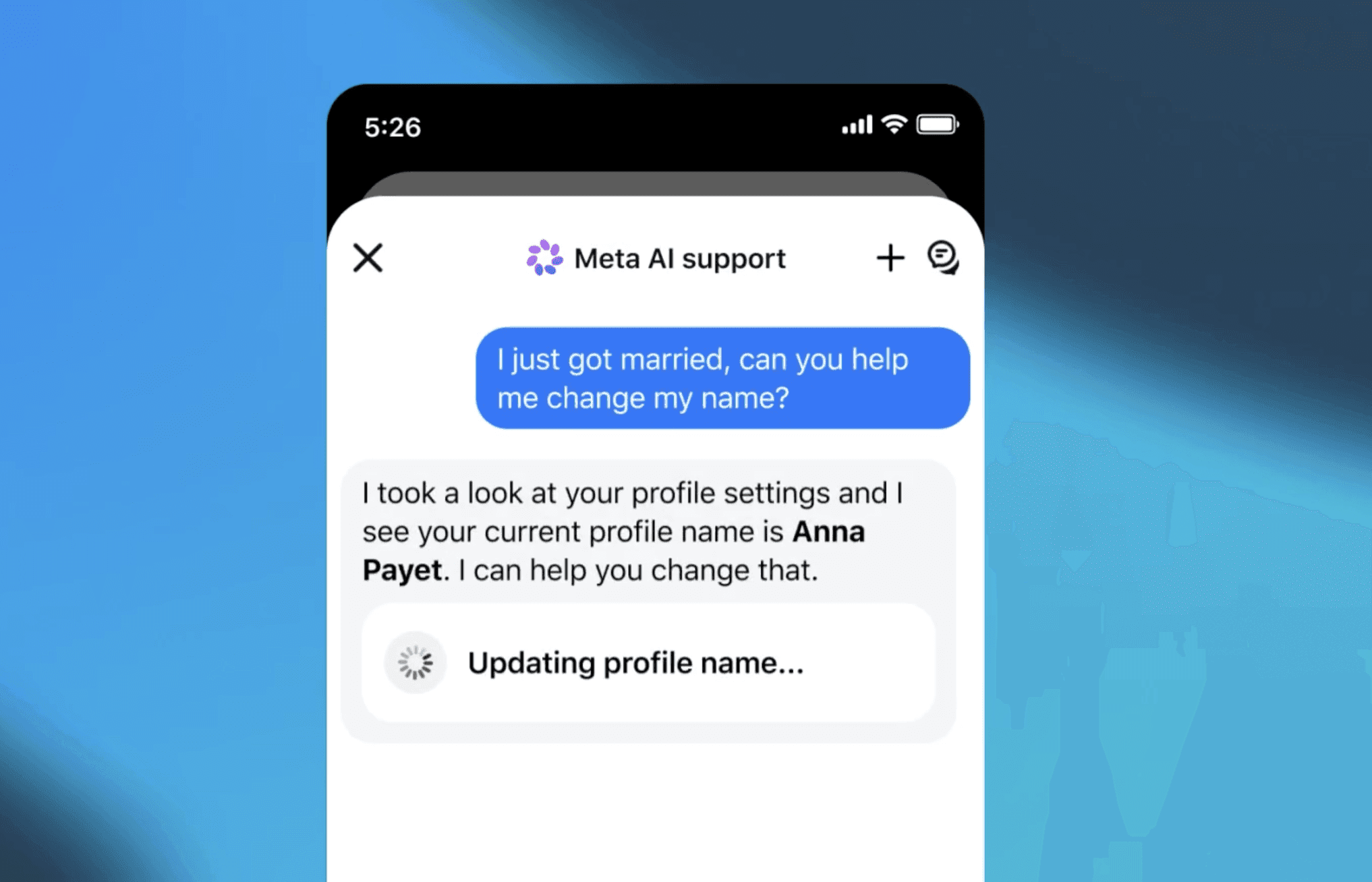

Discover the top AI tools handpicked daily by our editors to help you stay ahead with the latest and most innovative solutions.