Join Our Community










Get the earliest access to hand-picked content weekly for free.
Spam-free guaranteed! Only insights.
Join Our Community
Get the earliest access to hand-picked content weekly for free.
Spam-free guaranteed! Only insights.
🎯 Quick Impact Summary
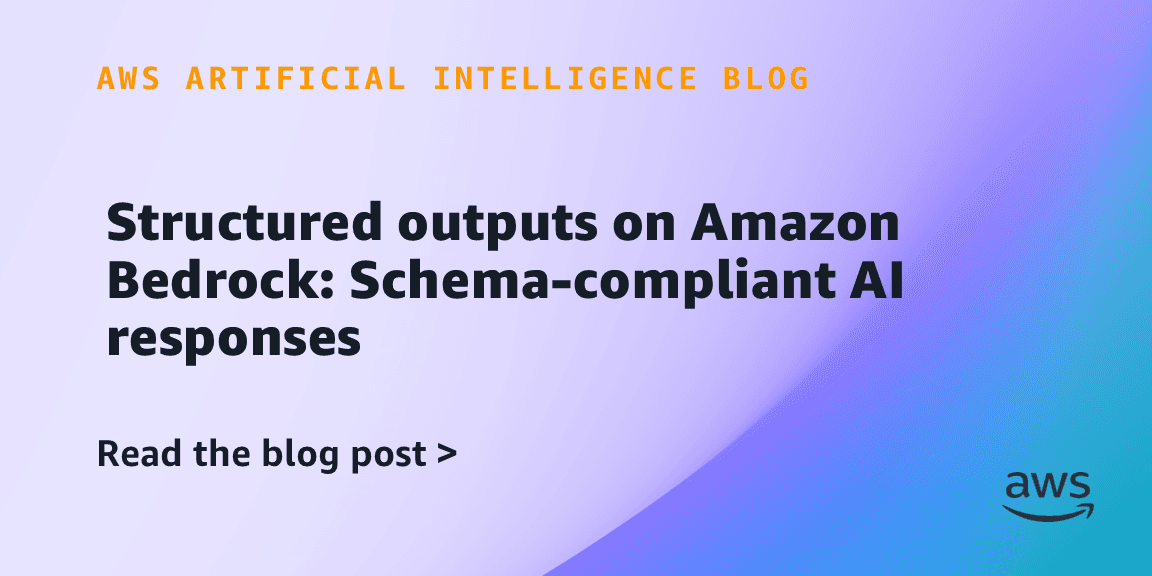
Amazon Bedrock's structured outputs feature allows developers to constrain generative AI responses to specific JSON schemas, ensuring predictable and parseable data formats. This capability solves the critical challenge of inconsistent AI outputs that break application integrations and require complex post-processing. It is designed for developers, data engineers, and enterprise teams building production-grade AI applications that need reliable data extraction, API integration, and automated workflows. The key benefits include reduced latency, eliminated parsing errors, and streamlined integration with existing systems.
The structured outputs feature leverages JSON Schema to enforce strict response formats from foundation models. Unlike traditional prompting that often yields inconsistent formatting, this approach guarantees that the AI will return data matching your exact specifications. Key capabilities include:
For example, you can define a schema for customer support tickets requiring specific fields: `{"ticket_id": "string", "priority": "enum[low, medium, high]", "description": "string"}`. The model will consistently return data in this exact format, making it immediately usable in downstream systems.
The technology relies on constrained decoding, where the model's token generation is guided by your schema during inference. When you invoke a model with a structured output request, Bedrock validates your JSON Schema and applies constraints at the token level, preventing invalid responses before they occur. This is more efficient than post-processing or multiple attempts.
The implementation process is straightforward: define your JSON Schema, include it in your request payload, and receive validated responses. The schema supports standard JSON Schema keywords like `required`, `properties`, `enum`, `pattern`, and `format`. For complex nested structures, you can define recursive schemas or use `$ref` for reusable components.
Compared to traditional prompt engineering approaches, this method reduces token usage by eliminating the need for extensive instructions about format. It also improves reliability—where a standard prompt might return "The priority is high" in one call and "HIGH" in another, structured outputs guarantee consistency.
Data Extraction and Normalization: Extract structured data from unstructured text like emails, documents, or chat logs. A financial services company could parse invoice data into standardized fields (vendor, amount, date, line items) with 99%+ accuracy.
API Integration: Generate API-compatible payloads directly from natural language requests. For instance, "Create a new user account for John Doe with email john@example.com" can produce `{"action": "create_user", "name": "John Doe", "email": "john@example.com"}` ready for immediate API consumption.
Automated Reporting: Convert business queries into structured reports. Marketing teams can request "Show me campaign performance for Q3" and receive consistently formatted JSON with fields for impressions, clicks, conversions, and spend across all campaigns.
Compliance and Audit Trails: In regulated industries, structured outputs ensure all AI-generated data meets compliance requirements by enforcing mandatory fields and valid value ranges.
Amazon Bedrock follows a pay-per-token model for inference, with pricing varying by model and region. Structured outputs do not incur additional charges beyond standard inference costs. Current pricing (as of 2024):
No upfront costs or minimum commitments required. You can estimate costs using the AWS Pricing Calculator. For high-volume usage, consider AWS Savings Plans or committed use discounts. The free tier includes 25,000 input tokens and 25,000 output tokens monthly for Claude models during the first 6 months.
Pros:
Cons:
Who Should Use It:
vs OpenAI's Structured Outputs: OpenAI offers similar functionality with JSON mode and function calling. Bedrock provides better AWS integration and potentially lower costs at scale, while OpenAI has broader model options and simpler setup for non-AWS users.
vs Google Vertex AI: Vertex AI offers structured output capabilities but with different schema implementations. Bedrock's advantage is its model marketplace approach, letting you choose from multiple providers while maintaining consistent API patterns.
vs Self-hosted Solutions: Running your own models gives full control but requires significant infrastructure management. Bedrock provides serverless scalability without operational overhead.
FAQ
Related Topics
AI Spotlights
Unleashing Today's trailblazer, this week's game-changers, and this month's legends in AI. Dive in and discover tools that matter.

Claude Fable 5 Review: Mythos Power with Safety
Gemma 4 12B Review: Multimodal AI on Your Laptop

Google Dreambeans Review: AI Cartoon Stories
NVIDIA Nemotron 3 Ultra: 550B MoE LLM Review
Meta AI Agent for Enterprises: Global Launch

Gemini Omni and 3.5: Google's Latest AI Models
Step 3.7 Flash Review: 198B MoE Vision-Language Model

Gemini Spark Review: Google's AI Agent Goes Personal
Microsoft Agent Governance Toolkit Review
Gemini Spark AI Agent Review: Always-On Automation

MAI-Thinking-1 Review: Microsoft's Advanced Reasoning AI
Microsoft Scout Review: OpenClaw-Powered AI Assistant

Microsoft MDASH Review: 100+ AI Agents for Threat Hunting

Google Phone App Fake Call Detection Review
Stable Audio 3 Review: Fast AI Audio Generation
Claude Opus 4.8: Dynamic Workflows & Faster AI
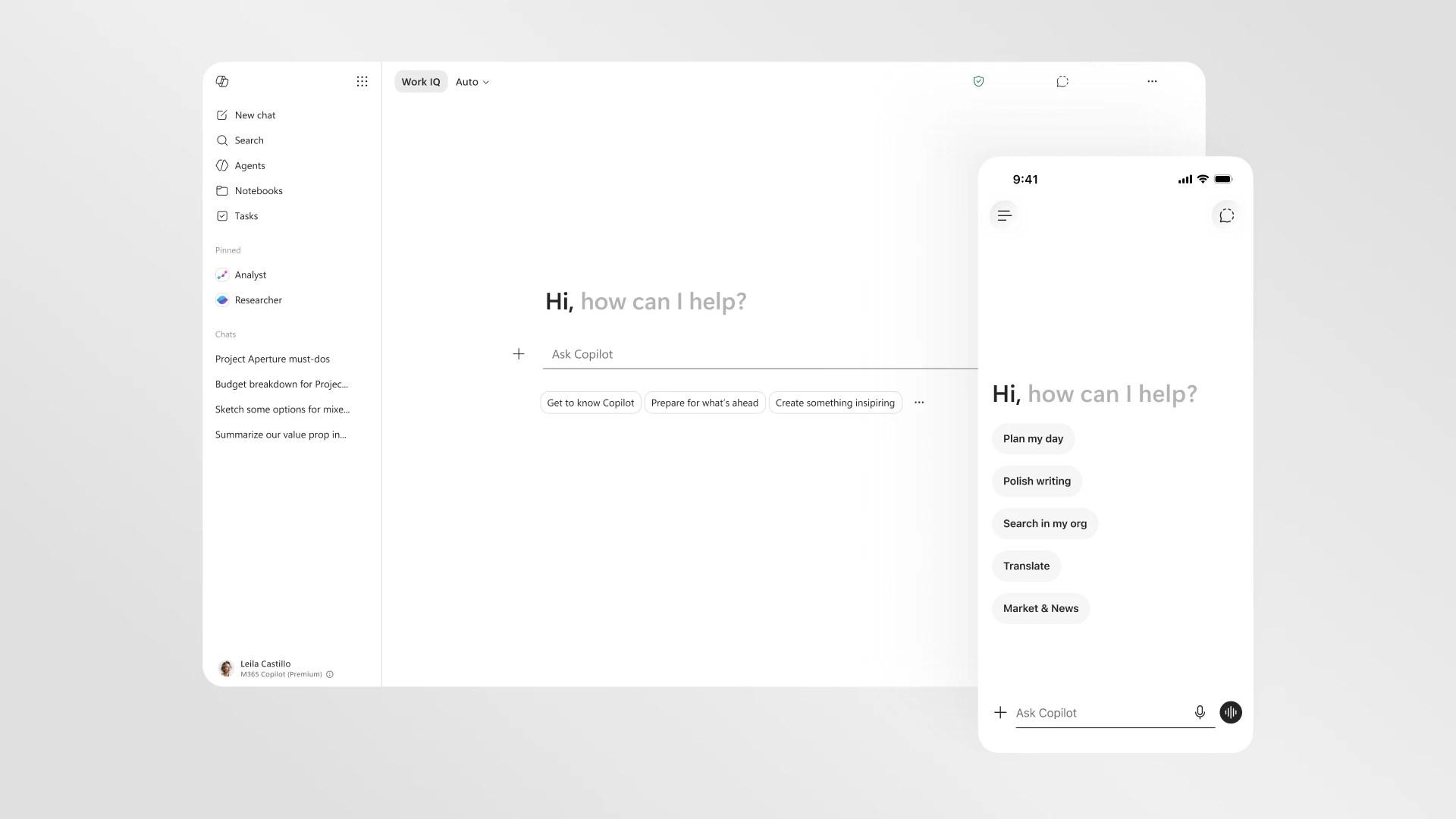
Microsoft 365 Copilot Redesign: 2x Speed Boost

Perplexity Bumblebee: AI Supply Chain Security Scanner

AWS OpenSearch Serverless Review: Enterprise Search Reimagined
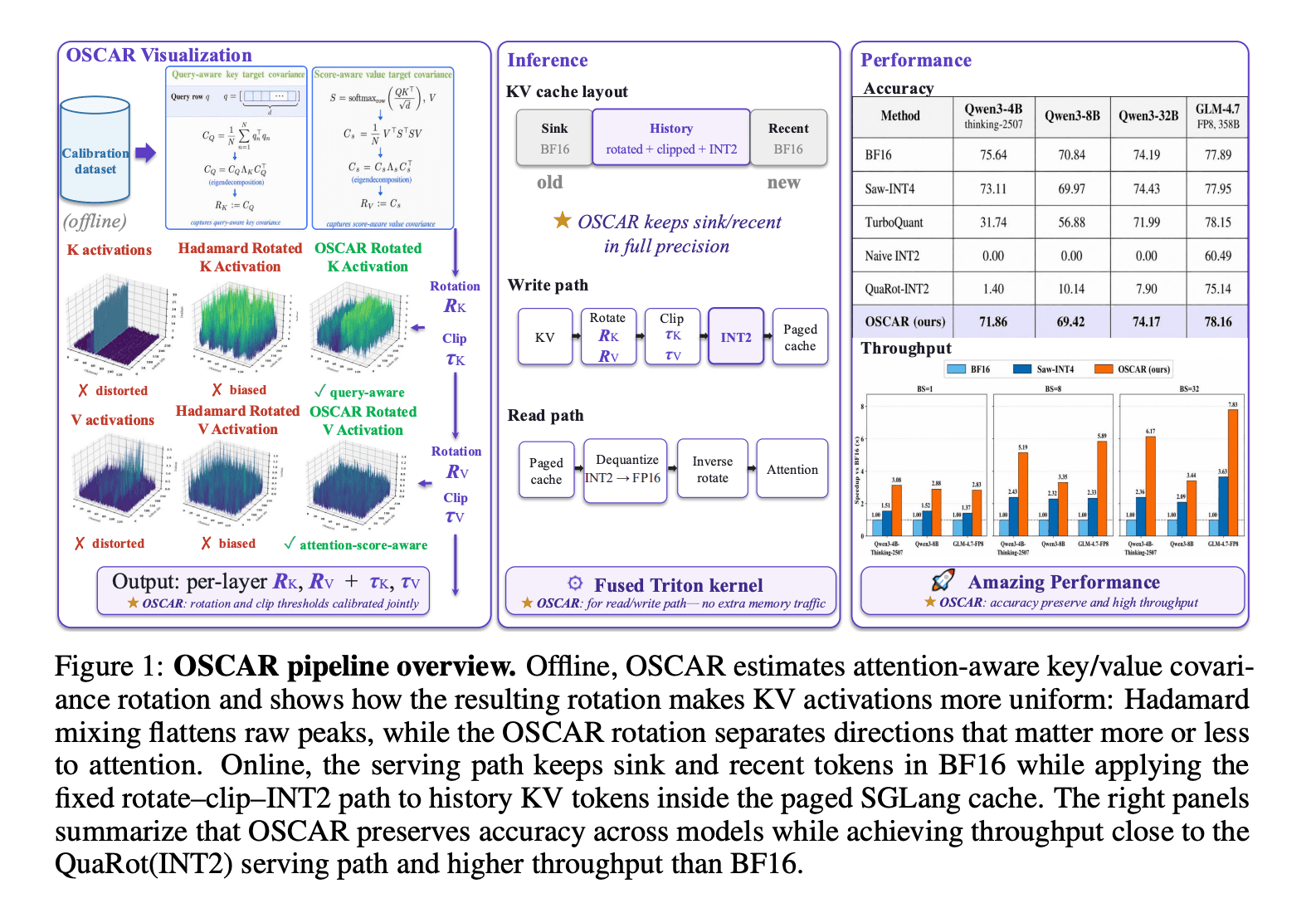
OSCAR: 2-Bit KV Cache Quantization for LLMs
You Might Like These Latest News
All AI NewsStay informed with the latest AI news, breakthroughs, trends, and updates shaping the future of artificial intelligence.
Microsoft Patches Zero-Day After Researcher Disclosure
Jun 10, 2026
NVIDIA GPUs Power Apple's Private Cloud Compute Expansion
Jun 10, 2026
GM Launches Vehicle-to-Grid Tech to Power AI Data Centers
Jun 10, 2026
Alphabet's $85B AI Investment Signals Major Shift
Jun 5, 2026
AI Cognitive Fatigue: Work Smarter, Not Harder
Jun 5, 2026
Nvidia Unveils Physical AI Research with Cosmos 3
Jun 5, 2026
Airbnb CEO Launches AI Lab to Build Custom LLMs
Jun 5, 2026
Anthropic's IPO Filing Balances Growth With Responsible AI
Jun 3, 2026
Meta's AI Chatbot Exploited to Hijack Instagram Accounts
Jun 3, 2026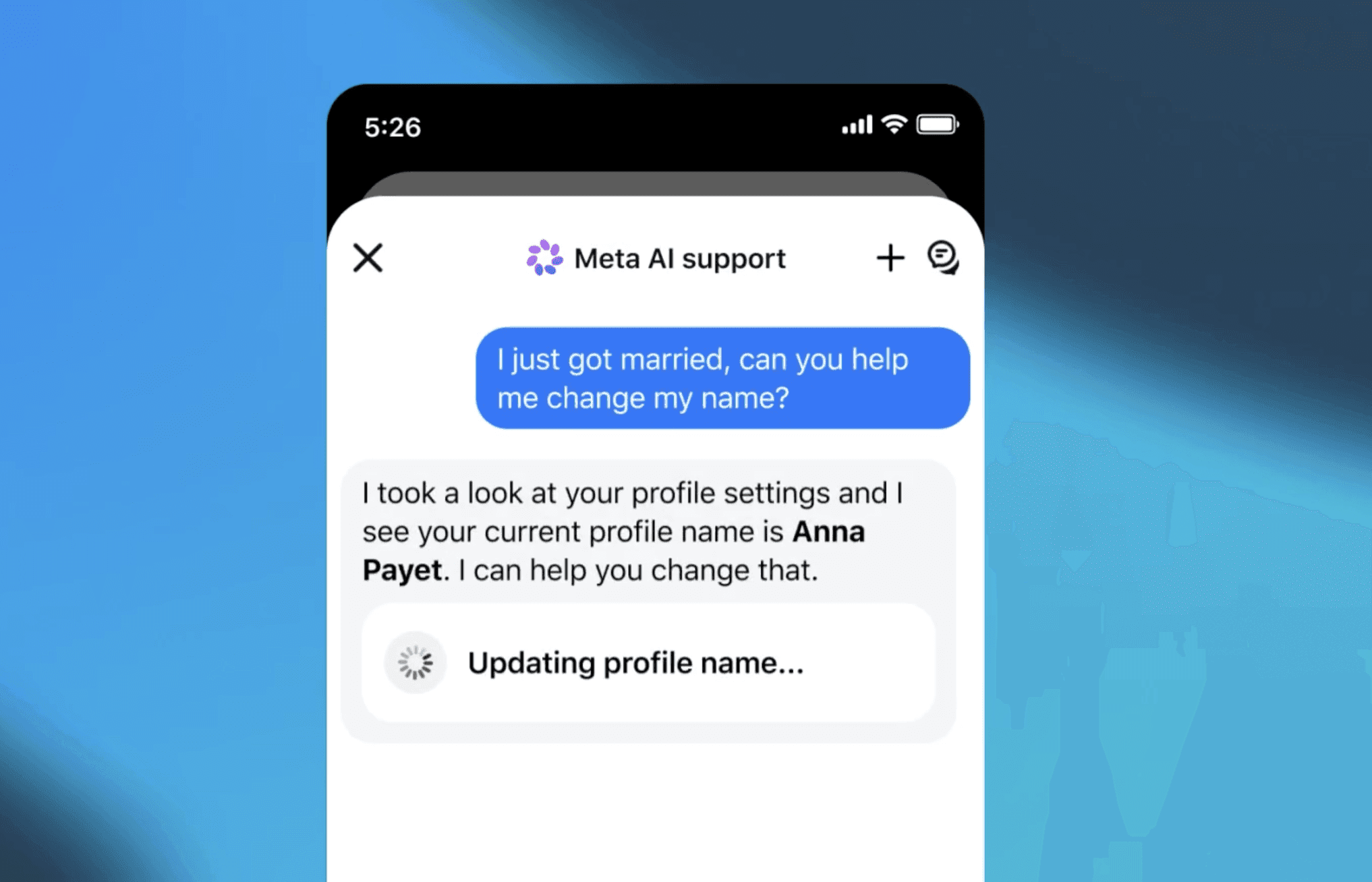

Discover the top AI tools handpicked daily by our editors to help you stay ahead with the latest and most innovative solutions.