Join Our Community










Get the earliest access to hand-picked content weekly for free.
Spam-free guaranteed! Only insights.
Join Our Community
Get the earliest access to hand-picked content weekly for free.
Spam-free guaranteed! Only insights.
🎯 Quick Impact Summary
-Hugging Face Transformers is the industry standard for Natural Language Processing, offering thousands of pre-trained models.
-The library solves the problem of model accessibility, allowing complex AI implementation in just a few lines of code.
-It supports a "pay-for-what-you-use" model for cloud hosting, while the open-source library itself remains free.
-The main trade-off is the high computational cost (GPU memory) required to run large models effectively.
-Best suited for developers and researchers who need state-of-the-art accuracy in text generation, classification, and translation.
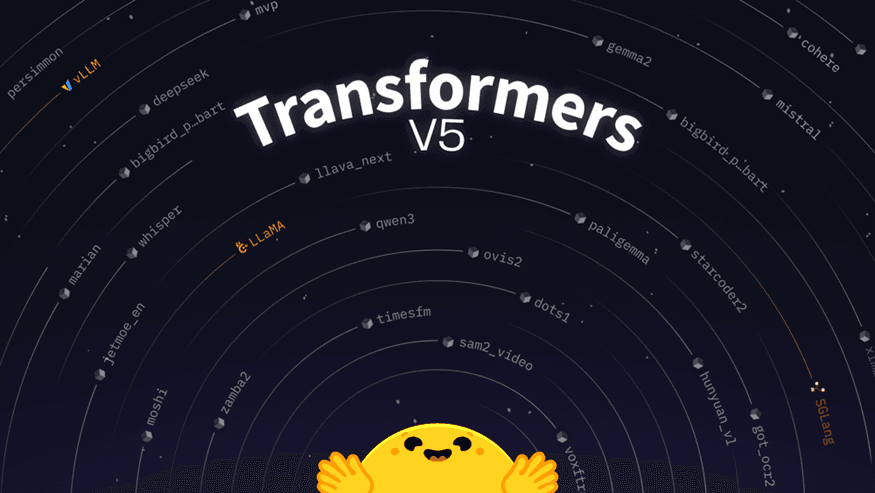
The AI community is buzzing with the recent updates surrounding Transformers, the foundational library by Hugging Face that powers the vast majority of today's open-source Large Language Models (LLMs). While the specific nomenclature "v5" is currently being used by the community to refer to the massive shift towards Transformer-based architectures and the simplification of the `transformers` library, it represents a pivotal moment where state-of-the-art AI becomes accessible to everyone. This tool solves the critical bottleneck of complexity, allowing developers to implement, fine-tune, and deploy models like BERT, GPT, and T5 without building infrastructure from scratch. It is designed for AI researchers, software engineers, and data scientists who want to leverage cutting-edge NLP capabilities without the heavy lifting of training massive models from zero. The key benefit is democratization: access to thousands of pre-trained models that can be integrated into applications with just a few lines of code.
Hugging Face Transformers is not just a library; it is an ecosystem. Its standout feature is the `pipeline` API, which abstracts away the complex tokenization and tensor manipulation required to use models. For example, a user can set up a text classification system with three lines of code. The library supports three primary architectures: Tokenizers (for fast text processing), Transformers (the neural network models), and Datasets (for efficient data handling). It boasts a model hub containing over 100,000 pre-trained models covering 26 languages, ranging from text generation to computer vision and audio processing. Unlike building a custom Transformer from scratch, Hugging Face provides fine-tuned checkpoints specifically for tasks like Named Entity Recognition (NER) or Question Answering, drastically reducing the time to production.
At its core, the library wraps PyTorch, TensorFlow, and JAX backends to allow for flexible tensor operations. The technology relies on the Transformer architecture, specifically utilizing the "Self-Attention" mechanism to weigh the importance of different words in a sentence relative to one another. The library is designed to be interoperable; a model trained in PyTorch can often be converted to TensorFlow for deployment and vice versa via the "Trainer" API, which handles the entire training loop, logging, and evaluation metrics. This abstraction allows users to focus on data and hyperparameters rather than the mechanics of backpropagation.
The practical applications are vast. In the enterprise sector, companies use Transformers to build sophisticated customer support chatbots that understand context and sentiment. For search engine optimization, developers utilize the library to create semantic search engines that understand user intent rather than just keyword matching. In the legal sector, teams fine-tune models to scan thousands of documents for specific clauses (Contract Analysis). A specific example is a developer building a spam filter; instead of training a Naive Bayes classifier, they can download a RoBERTa model fine-tuned for spam detection from the Hub and deploy it instantly for higher accuracy.
Hugging Face operates on a "freemium" model that is highly generous. -Free Tier: Unlimited access to public models and datasets. You can run these locally or on your own infrastructure at no cost. -Pro Account ($9/month): Provides access to private models and datasets, faster download speeds, and community support. -Enterprise Hub: Custom pricing for organizations needing dedicated infrastructure, SSO, advanced security, and SLAs. They also offer Inference Endpoints, where you pay for compute time (GPU/CPU) to host models in the cloud, typically starting at a few cents per hour depending on the hardware.
Pros: -Unmatched Ecosystem: The sheer volume of community-contributed models is a massive advantage. -Interoperability: Seamless switching between PyTorch and TensorFlow. -Ease of Use: The `pipeline` API is arguably the best abstraction layer in the industry.
Cons: -Resource Heavy: Transformer models require significant RAM and VRAM, making them expensive to run on low-end hardware. -Learning Curve: While the API is simple, understanding the underlying architecture (attention masks, token types) is necessary for debugging.
Who Should Use It: This library is essential for NLP practitioners, startups building AI features, and researchers needing reproducible results. It is less ideal for simple classification tasks where lightweight models (like SVMs) suffice or for environments with strict hardware limitations.
FAQ
Related Topics
AI Spotlights
Unleashing Today's trailblazer, this week's game-changers, and this month's legends in AI. Dive in and discover tools that matter.

Claude Fable 5 Review: Mythos Power with Safety
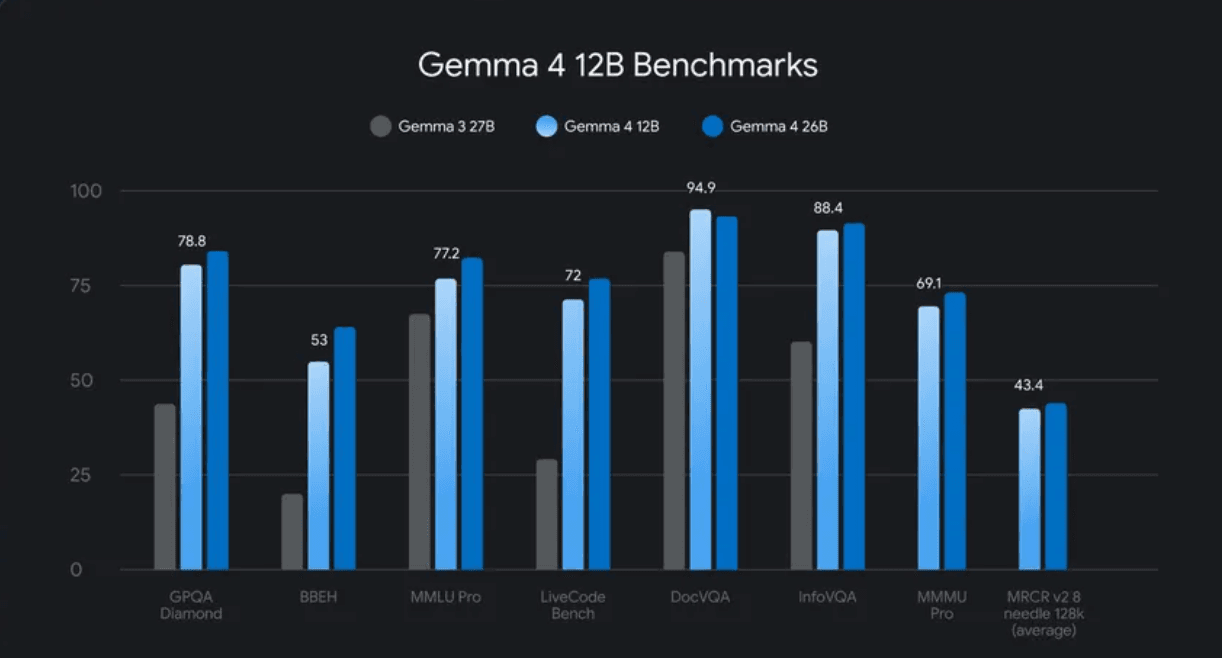
Gemma 4 12B Review: Multimodal AI on Your Laptop

Google Dreambeans Review: AI Cartoon Stories
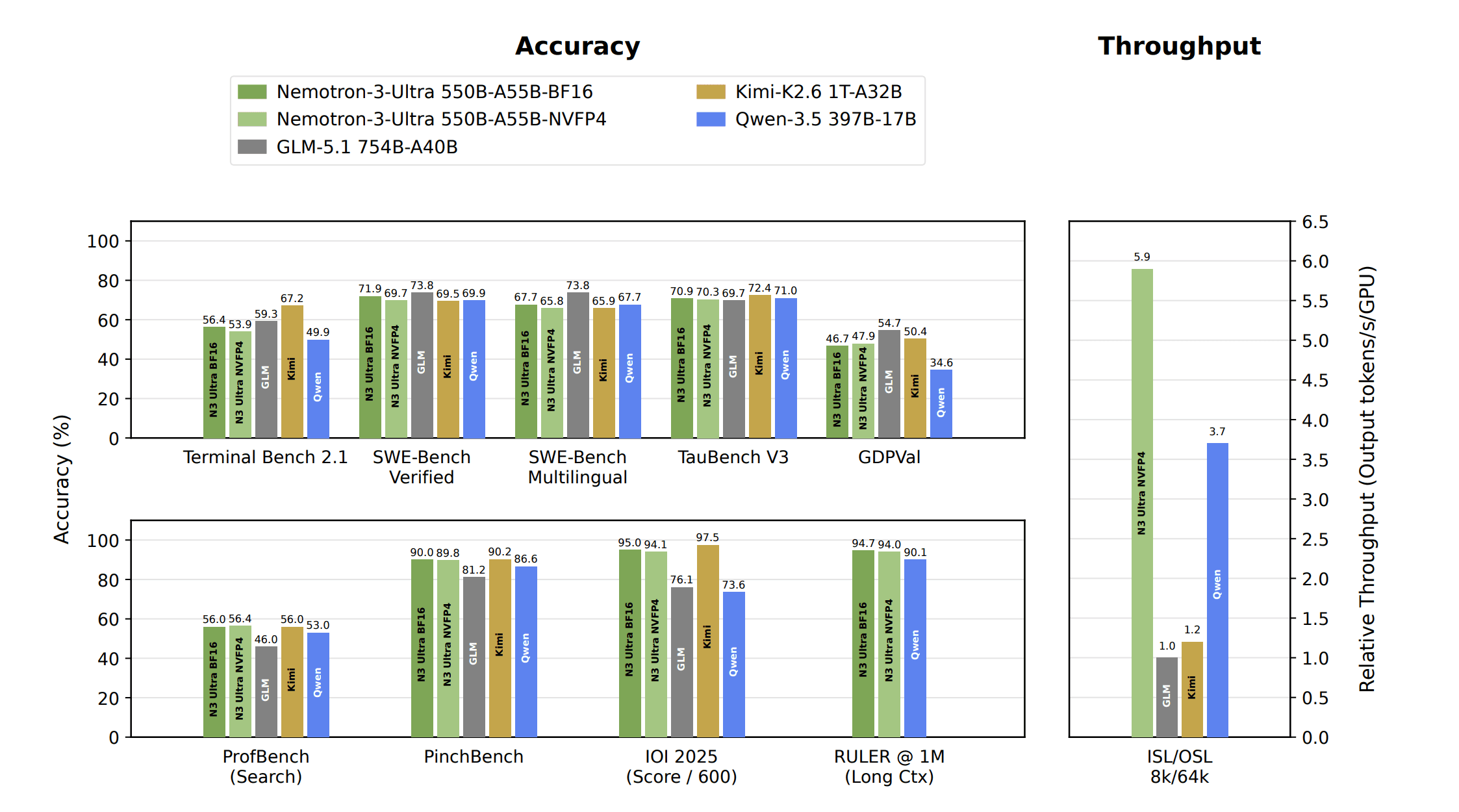
NVIDIA Nemotron 3 Ultra: 550B MoE LLM Review

Meta AI Agent for Enterprises: Global Launch

Gemini Omni and 3.5: Google's Latest AI Models
Step 3.7 Flash Review: 198B MoE Vision-Language Model

Gemini Spark Review: Google's AI Agent Goes Personal
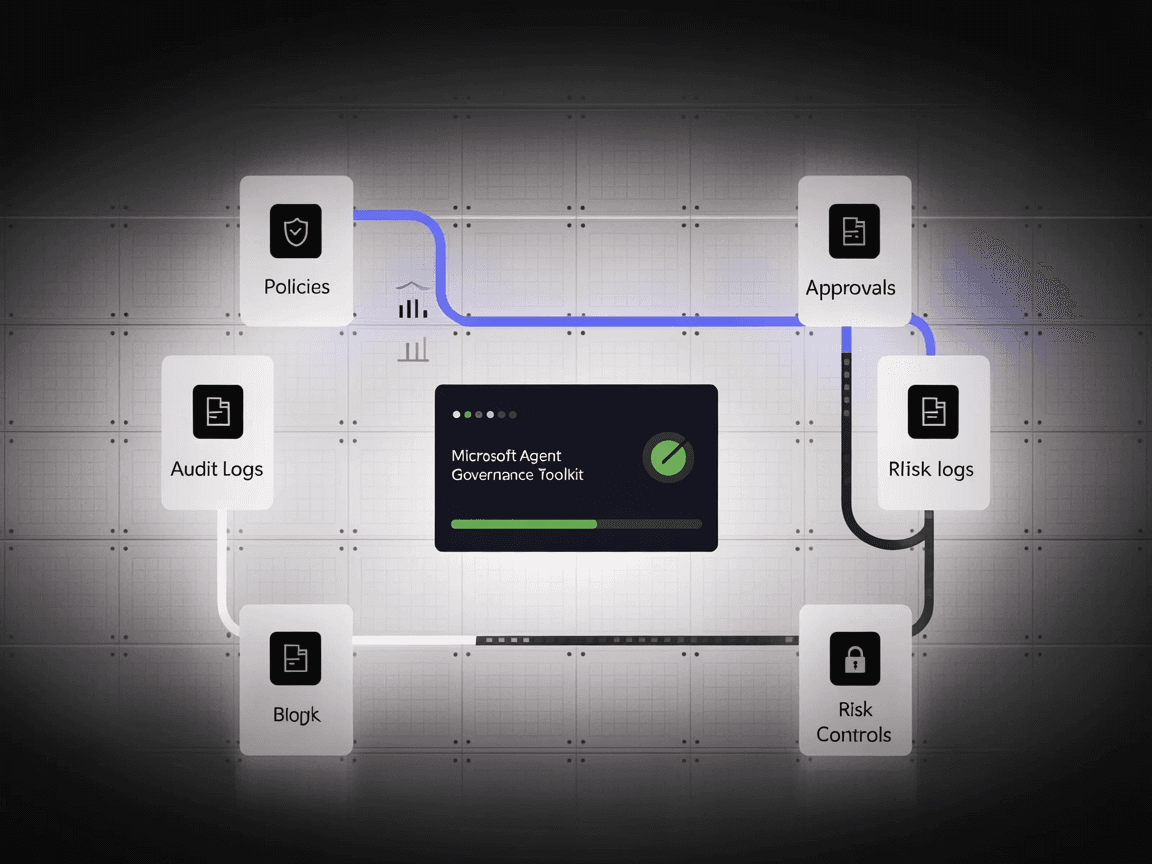
Microsoft Agent Governance Toolkit Review
Gemini Spark AI Agent Review: Always-On Automation

MAI-Thinking-1 Review: Microsoft's Advanced Reasoning AI
Microsoft Scout Review: OpenClaw-Powered AI Assistant

Microsoft MDASH Review: 100+ AI Agents for Threat Hunting

Google Phone App Fake Call Detection Review
Stable Audio 3 Review: Fast AI Audio Generation
Claude Opus 4.8: Dynamic Workflows & Faster AI
Microsoft 365 Copilot Redesign: 2x Speed Boost

Perplexity Bumblebee: AI Supply Chain Security Scanner

AWS OpenSearch Serverless Review: Enterprise Search Reimagined
OSCAR: 2-Bit KV Cache Quantization for LLMs
You Might Like These Latest News
All AI NewsStay informed with the latest AI news, breakthroughs, trends, and updates shaping the future of artificial intelligence.
Microsoft Patches Zero-Day After Researcher Disclosure
Jun 10, 2026
NVIDIA GPUs Power Apple's Private Cloud Compute Expansion
Jun 10, 2026
GM Launches Vehicle-to-Grid Tech to Power AI Data Centers
Jun 10, 2026
Alphabet's $85B AI Investment Signals Major Shift
Jun 5, 2026
AI Cognitive Fatigue: Work Smarter, Not Harder
Jun 5, 2026
Nvidia Unveils Physical AI Research with Cosmos 3
Jun 5, 2026
Airbnb CEO Launches AI Lab to Build Custom LLMs
Jun 5, 2026
Anthropic's IPO Filing Balances Growth With Responsible AI
Jun 3, 2026
Meta's AI Chatbot Exploited to Hijack Instagram Accounts
Jun 3, 2026

Discover the top AI tools handpicked daily by our editors to help you stay ahead with the latest and most innovative solutions.