Join Our Community










Get the earliest access to hand-picked content weekly for free.
Spam-free guaranteed! Only insights.
Join Our Community
Get the earliest access to hand-picked content weekly for free.
Spam-free guaranteed! Only insights.

🎯 Quick Impact Summary
• ByteDance has launched SeedReam 4.0, their most advanced multimodal AI model to date, capable of processing both text and visual information simultaneously.
• The new model features significantly improved reasoning abilities, better visual understanding, and enhanced capabilities for complex tasks like math problem-solving.
• SeedReam 4.0 demonstrates superior performance in understanding spatial relationships and can process multiple images at once for comparative analysis.
• ByteDance's latest AI advancement positions the company as a serious competitor in the rapidly evolving multimodal AI landscape alongside models from OpenAI, Google, and Anthropic.
• The model is designed with a focus on both practical applications and research advancement, potentially transforming how users interact with AI systems.
ByteDance, the parent company of TikTok, has officially launched SeedReam 4.0, its most advanced multimodal AI model to date. This latest iteration represents a significant leap forward in artificial intelligence capabilities, combining sophisticated text processing with enhanced visual understanding to create a truly versatile AI system.
The new model builds upon ByteDance's previous AI efforts while introducing substantial improvements in reasoning, visual comprehension, and multimodal integration. As the AI race intensifies among tech giants, SeedReam 4.0 positions ByteDance as a formidable competitor in the rapidly evolving landscape of generative AI technology.
SeedReam 4.0 stands out for its ability to seamlessly process and understand both text and visual information simultaneously. Unlike earlier models that might treat these inputs as separate streams, ByteDance's latest offering integrates them into a cohesive understanding system.
The model demonstrates remarkable proficiency in interpreting complex visual scenes, recognizing objects, and understanding spatial relationships. When presented with images containing multiple elements, SeedReam 4.0 can accurately identify individual components while also comprehending how they relate to each other within the broader context.
One of the most impressive aspects of the new model is its capacity to analyze multiple images at once, allowing for comparative analysis across visual inputs. This functionality opens up new possibilities for applications requiring nuanced visual assessment, from retail product comparisons to medical image analysis.
ByteDance has also significantly enhanced the model's reasoning capabilities, enabling it to tackle complex problems that require logical thinking and step-by-step analysis. This improvement is particularly evident in its ability to solve mathematical problems, where it can break down equations, apply appropriate formulas, and explain its reasoning process clearly.
The technical architecture behind SeedReam 4.0 represents a substantial advancement over previous iterations. ByteDance has implemented a more sophisticated neural network design that allows for better information flow between different components of the system.
Processing efficiency has been dramatically improved, with the model capable of handling complex queries with reduced latency. This enhancement makes real-time applications more feasible, potentially expanding the range of use cases where the technology can be deployed effectively.
SeedReam 4.0's training methodology has also evolved, incorporating a more diverse dataset that helps mitigate biases and improve performance across different domains. ByteDance reports that the model has been trained on a wide range of content types, including educational materials, scientific literature, and everyday visual scenes.
The model's context window has been expanded as well, allowing it to maintain coherence across longer interactions. This improvement enables more natural conversational flows and better retention of information throughout extended dialogues, addressing a common limitation in earlier AI systems.
SeedReam 4.0's enhanced capabilities open up numerous practical applications across various industries. In education, the model could serve as an intelligent tutor, capable of explaining complex concepts while referencing visual materials to aid understanding. Its ability to process and explain mathematical problems makes it particularly valuable for students struggling with quantitative subjects.
For creative professionals, the model offers powerful assistance in content creation, able to generate ideas based on visual references or textual descriptions. Its improved understanding of spatial relationships and visual aesthetics could make it an invaluable tool for designers, marketers, and other visual creators.
In the business sector, SeedReam 4.0 could transform data analysis by extracting insights from both textual reports and visual data representations. Its ability to compare multiple images simultaneously could streamline product development processes, quality control procedures, and competitive analysis.
ByteDance's advancement also signals intensifying competition in the AI space, with companies like OpenAI, Google, and Anthropic all working on their own multimodal models. This competitive environment is likely to accelerate innovation, potentially leading to even more capable AI systems in the near future.
As these technologies continue to evolve, questions about responsible deployment, potential misuse, and regulatory frameworks will become increasingly important. ByteDance has indicated a commitment to ethical AI development, though specific details about safety measures implemented in SeedReam 4.0 remain somewhat limited.
FAQ
AI Spotlights
Unleashing Today's trailblazer, this week's game-changers, and this month's legends in AI. Dive in and discover tools that matter.

Notion AI Agents: Turn Your Workspace Into an AI Hub

Edge Copilot Update: AI Now Reads All Your Tabs
GLiGuard Review: 300M Safety Model Beats Larger Competitors
Cline SDK Review: Open-Source Agent Runtime

OpenAI Codex Now on ChatGPT Mobile App

Clawdmeter: Claude Code Usage Dashboard
ZAYA1-8B-Diffusion: 7.7x Faster MoE Model

Claude for Small Business Contract Review Tool

Gemini Intelligence Review: AI Phone Control

Google Gboard Gemini Dictation: AI Voice Recognition
Google Create My Widget: AI-Powered Custom Widgets

Wispr Flow Review: Hinglish Voice AI for India
OpenAI Codex Chrome Extension Review

Perplexity Personal Computer: AI Agents for Mac
OpenAI Voice Intelligence API: New Features Review

ChatGPT Trusted Contact: New Self-Harm Safeguard
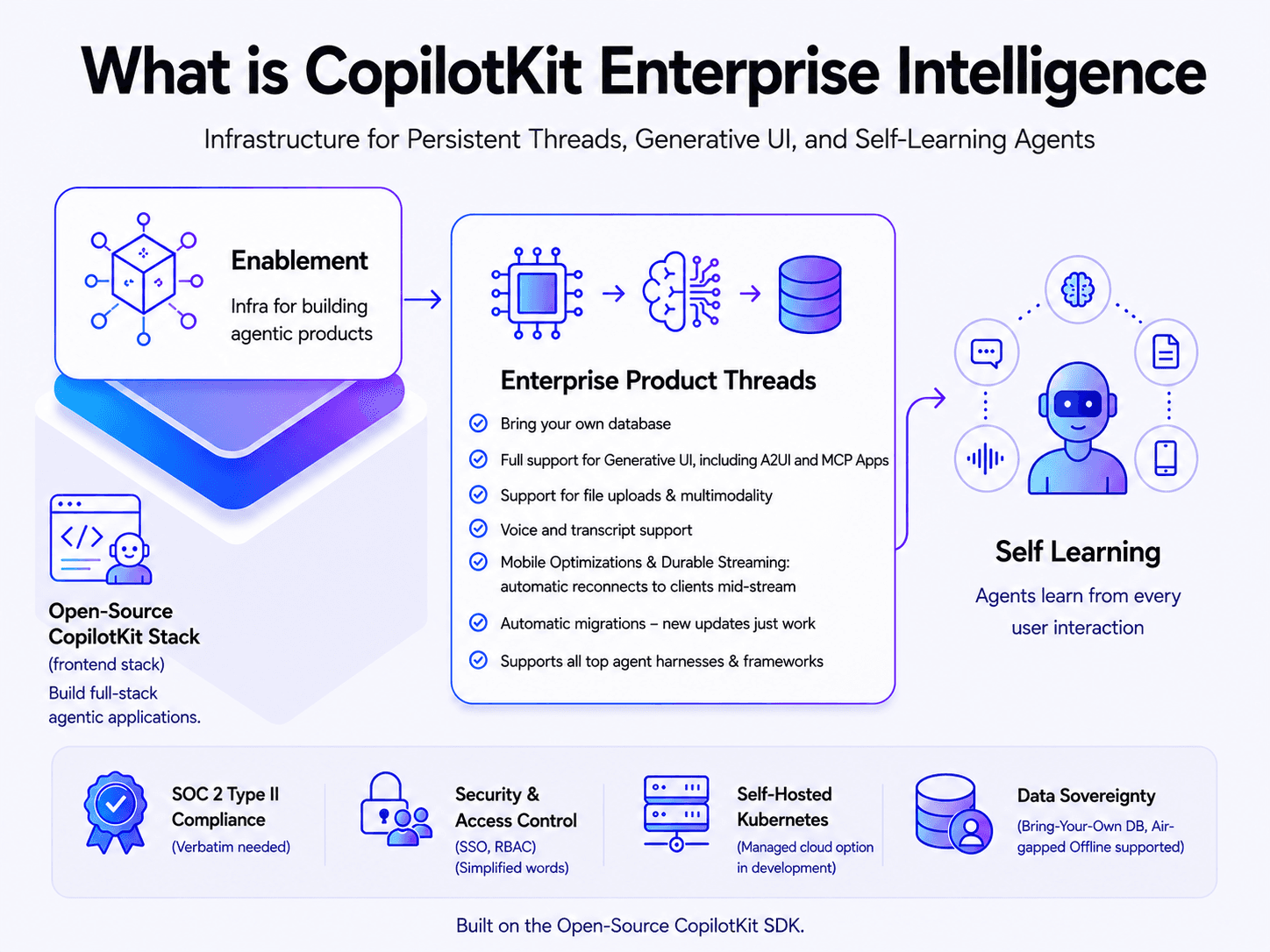
CopilotKit Intelligence: Enterprise AI Memory Platform
OpenAI Training Spec: GPU Performance Breakthrough
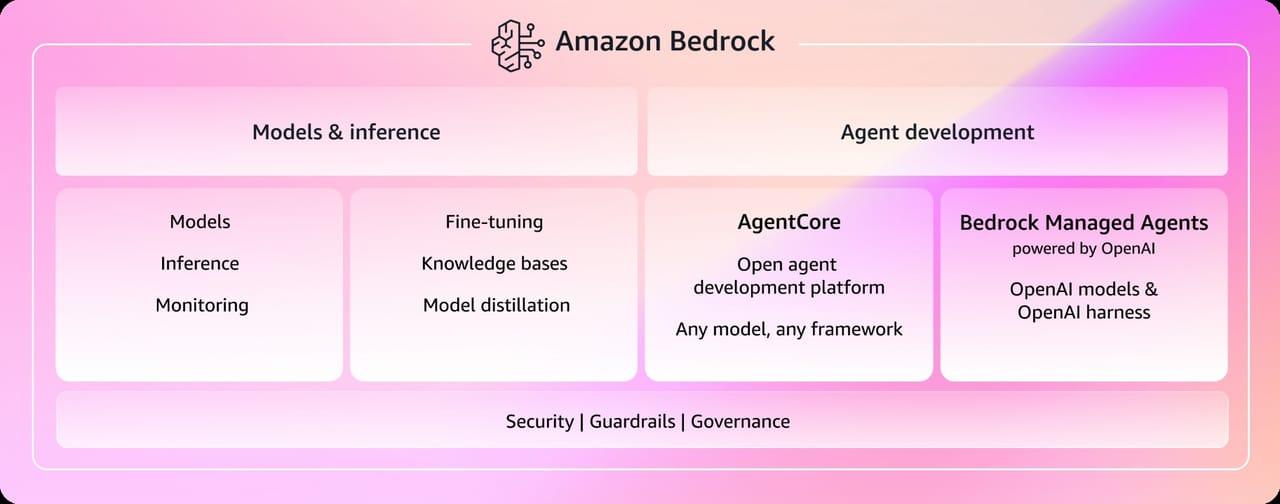
AWS Managed Agents Review: OpenAI Partnership

Glean AI Search Review: Enterprise Search Redefined
You Might Like These Latest News
All AI NewsStay informed with the latest AI news, breakthroughs, trends, and updates shaping the future of artificial intelligence.
Apple's Siri Revamp Adds Auto-Deleting Chats
May 18, 2026
ArXiv Bans Authors for AI Misuse in Research
May 17, 2026
63% of Orgs Lack AI Governance Policies
May 16, 2026
AI Chatbots Leak Personal Phone Numbers
May 16, 2026
Making AI Sustainable: What's Missing
May 16, 2026
OpenAI Explores Legal Action Against Apple
May 16, 2026
Microsoft Cancels Claude Code Licenses
May 16, 2026
YouTube Expands AI Deepfake Detection to All Adults
May 16, 2026
Anthropic and PwC Embed Claude in Enterprise
May 16, 2026

Discover the top AI tools handpicked daily by our editors to help you stay ahead with the latest and most innovative solutions.