









Age of AI Toolsv2.beta
For YouJobsUse Cases
Media-HubNEW

Join Our Community

Get the earliest access to hand-picked content weekly for free.

Spam-free guaranteed! Only insights.
Join Our Community

Get the earliest access to hand-picked content weekly for free.

Spam-free guaranteed! Only insights.

Trusted by Leading Review and Discovery Websites

Age of AI Tools on Product HuntApproved on SaaSHubAlternativeTo
AI Tools
  • For You!
  • Discover All AI Tools
  • Best AI Tools
  • Free AI Tools
  • Tools of the DayNEW
  • All Use Cases
  • All Jobs
Trend UseCases
  • AI Image Generators
  • AI Video Generators
  • AI Voice Generators
Trend Jobs
  • Graphic Designer
  • SEO Specialist
  • Email Marketing Specialist
Media Hub
  • Go to Media Hub
  • AI News
  • AI Tools Spotlights
Age of AI Tools
  • What's New
  • Story of Age of AI Tools
  • Cookies & Privacy
  • Terms & Conditions
  • Request Update
  • Bug Report
  • Contact Us
Submit & Advertise
  • Submit AI Tool
  • Promote Your Tool50% Off

Agent of AI Age

Looking to discover new AI tools? Just ask our AI Agent

Copyright © 2026 Age of AI Tools. All Rights Reserved.

Media HubTools SpotlightGoogle Colab MCP Server: AI Agents Meet Cloud GPUs
20 Mar 20267 min read

Google Colab MCP Server: AI Agents Meet Cloud GPUs

Google Colab MCP Server: AI Agents Meet Cloud GPUs

🎯 Quick Impact Summary

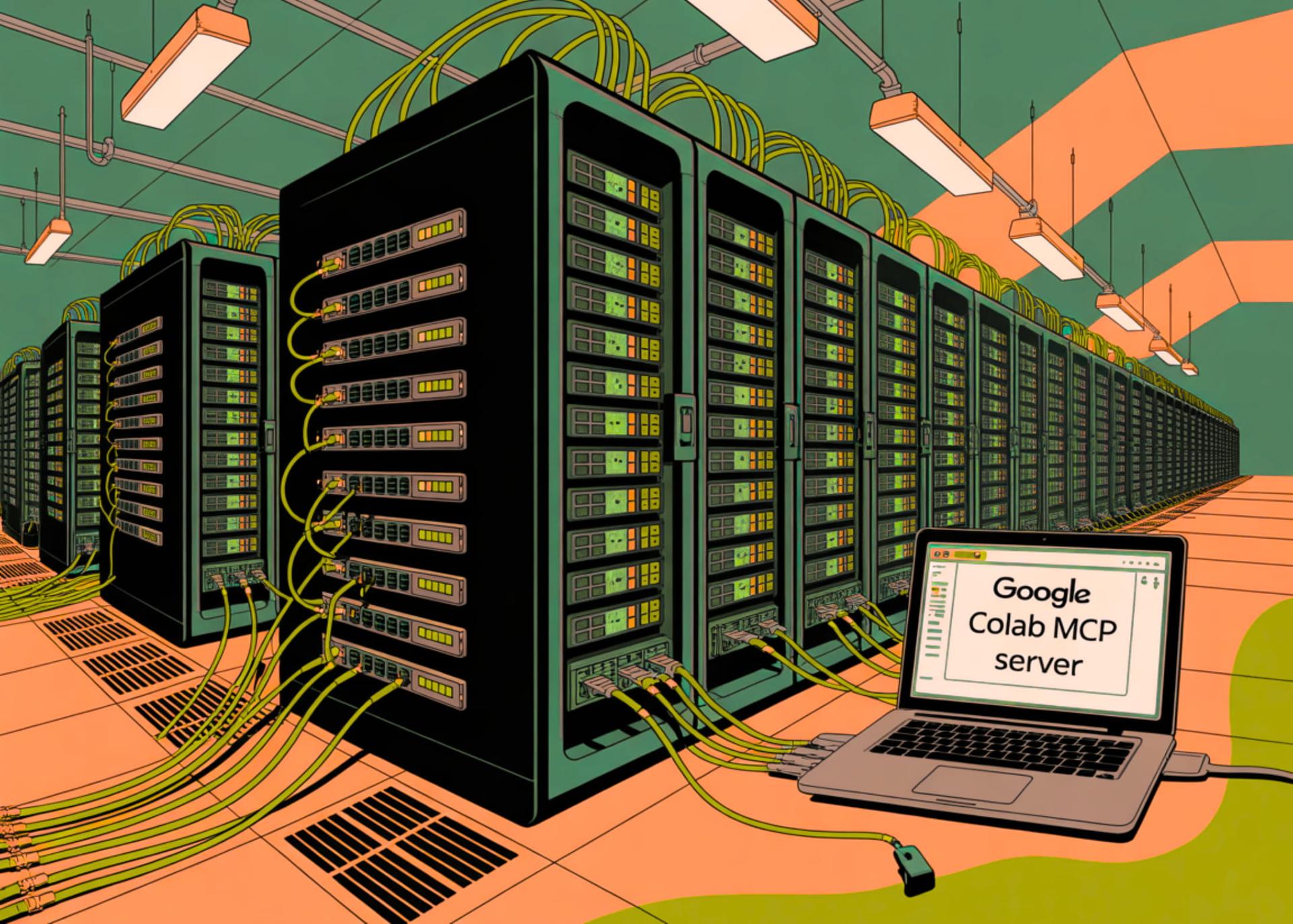
Google has released the Colab MCP Server, an open-source implementation of the Model Context Protocol that fundamentally changes how AI agents interact with cloud computing resources. This breakthrough enables local AI agents to programmatically access, create, modify, and execute Python code within Google Colab's GPU-powered environment, moving beyond simple code generation into true agent-driven computation. The integration represents a significant shift in making enterprise-grade computing infrastructure accessible to AI agents running anywhere.

What's New in Google Colab MCP Server

Google's latest release brings direct agent integration to Colab through the Model Context Protocol standard. This isn't just an API wrapper—it's a fundamental architectural change that lets AI agents treat Colab as a native computing backend.

  • Model Context Protocol Implementation: Open-source MCP server enables standardized communication between local AI agents and Colab runtimes, following industry protocol standards for agent-tool interaction
  • Direct GPU Access: AI agents can request and utilize GPU resources from Colab without manual setup, enabling compute-intensive workloads to run on enterprise infrastructure
  • Programmatic Notebook Control: Agents can create new notebooks, modify existing code, execute cells, and retrieve results in real-time, treating Colab as a programmable compute layer
  • Local Agent Compatibility: Works with any local AI agent that supports MCP, including Claude, open-source models, and custom agent frameworks
  • Python Code Execution: Full Python environment access means agents can run data science workflows, train models, and process datasets directly in the cloud
  • Session Persistence: Agents maintain state across multiple interactions, enabling complex multi-step workflows without losing context or variables

Technical Specifications

The Colab MCP Server operates as a bridge between local AI systems and Google's cloud infrastructure, with specific technical capabilities designed for agent-driven workflows.

  • Protocol Standard: Implements Model Context Protocol (MCP) specification, ensuring compatibility with any MCP-compliant AI agent or framework
  • Runtime Environment: Connects to Google Colab's Jupyter notebook environment with full access to Python 3.x, installed libraries, and GPU acceleration (T4, V100, A100 depending on availability)
  • Authentication: Uses Google OAuth 2.0 for secure authentication, integrating with existing Google Cloud credentials and Colab account permissions
  • Execution Model: Asynchronous execution with real-time output streaming, supporting long-running computations and batch processing workflows
  • Resource Allocation: Agents can request specific GPU types and memory configurations, with automatic fallback to CPU if GPU unavailable

Official Benefits

  • Eliminates manual code copying and pasting between local environments and Colab, reducing workflow friction by automating the agent-to-cloud handoff
  • Enables AI agents to leverage enterprise-grade GPU computing without requiring agents to manage cloud infrastructure directly
  • Reduces latency in agent-driven data science workflows by allowing agents to execute compute-intensive tasks in optimized cloud environments
  • Provides standardized protocol support, ensuring compatibility across different AI agent frameworks and local LLM implementations
  • Simplifies multi-step workflows where agents need to iterate on code, test hypotheses, and refine models in a persistent cloud environment

Real-World Translation

What Each Feature Actually Means:

  • Model Context Protocol Implementation: Your local AI agent can now "speak" to Colab using a standard language. Instead of hacking together custom API calls, the agent uses MCP—the same protocol it uses for other tools. This means you can swap Colab for another MCP-compatible service without rewriting agent code.
  • Direct GPU Access: Imagine your local Claude instance needs to train a machine learning model. Instead of you manually uploading data to Colab and running cells, the agent requests GPU resources directly, runs the training, and returns results. The entire process is automated and invisible to you.
  • Programmatic Notebook Control: An AI agent can now create a new Colab notebook, write analysis code, execute it, and show you the results—all in one conversation. Previously, this required manual steps; now it's one seamless agent action.
  • Local Agent Compatibility: Whether you're running Claude locally, Llama 2, or a custom agent framework, if it supports MCP, it works with Colab. You're not locked into one vendor's agent implementation.
  • Session Persistence: Your agent can run an experiment, analyze results, modify the approach, and run again—all while remembering previous variables and outputs. This enables iterative workflows where the agent learns and refines its approach across multiple steps.

Before vs After

Before

AI agents could generate Python code, but you had to manually copy it into Colab, run it yourself, and report results back to the agent. Complex workflows required constant back-and-forth, with no direct agent access to cloud resources. GPU utilization required manual setup and credential management.

After

AI agents now execute code directly in Colab, access GPUs automatically, and maintain session state across multiple interactions. Workflows that previously required 10 manual steps now run with a single agent request. Agents can iterate on code, analyze results, and refine approaches without human intervention.

📈 Expected Impact: Reduce agent-to-cloud workflow time by 70-80% while enabling complex multi-step data science tasks to run autonomously in GPU-accelerated environments.

Job Relevance Analysis

AI Researcher

HIGH Impact
  • Use Case: Run experimental models, test hypotheses, and iterate on algorithms directly through agent interfaces without manual Colab navigation or code execution
  • Key Benefit: Accelerates research velocity by enabling agents to autonomously run experiments, collect metrics, and refine approaches across multiple iterations
  • Workflow Integration: Replaces manual notebook management with agent-driven experimentation pipelines where researchers define objectives and agents handle execution and analysis
  • Skill Development: Researchers develop expertise in prompt engineering for computational workflows and learn to design agent-driven research methodologies
  • Resource Optimization: Agents can automatically select appropriate GPU types and batch sizes, optimizing compute costs while maximizing throughput for large-scale experiments
AI Researcher

Advance innovation with AI tools for academic research, data analysis, knowledge representation, decision-making, and AI-powered chatbots.

6,692 Tools
AI Researcher

Data Scientist

HIGH Impact
  • Use Case: Build end-to-end data pipelines where agents handle data loading, preprocessing, model training, and evaluation in cloud-hosted notebooks with GPU acceleration
  • Key Benefit: Eliminates context switching between local development and cloud execution, enabling data scientists to stay in conversation-based workflows while agents handle heavy computation
  • Workflow Integration: Agents become active participants in exploratory data analysis, automatically generating visualizations, testing statistical hypotheses, and recommending next steps
  • Skill Development: Data scientists learn to architect agent-driven analytics workflows and develop intuition for when to delegate tasks to autonomous agents
  • Productivity Gain: Reduces time spent on repetitive tasks like data validation, feature engineering, and model evaluation by 60-70% through agent automation
Data Scientist

Understand business insights via AI for analyzing, predicting, data mining, data visualization, and data warehousing.

4,480 Tools
Data Scientist

3D Modeler

MEDIUM Impact
  • Use Case: Use agents to automate computational geometry tasks, run rendering pipelines in Colab's GPU environment, or process 3D datasets through machine learning models
  • Key Benefit: Access GPU-accelerated compute for 3D processing tasks without managing cloud infrastructure, enabling agents to handle batch processing of 3D assets
  • Workflow Integration: Agents can run neural rendering, 3D reconstruction from images, or point cloud processing tasks autonomously, with results returned for review and iteration
  • Skill Development: 3D modelers learn to integrate computational workflows into their creative process and understand how agents can augment traditional modeling tools
  • Workflow Enhancement: Enables integration of AI-driven 3D generation and processing into existing pipelines, allowing agents to handle preprocessing and optimization tasks
3D Modeler

Create beautiful 3D renders in minutes with AI tools for 3D design, characters, animation, and VR.

2,644 Tools
3D Modeler

Getting Started

How to Access

  1. Visit the official Google Colab MCP Server GitHub repository to review documentation and installation requirements
  2. Ensure you have an active Google account with Colab access and your local AI agent environment configured
  3. Install the MCP server on your local machine following the provided setup instructions for your operating system
  4. Authenticate using your Google credentials to establish the secure connection between your local agent and Colab

Quick Start Guide

For Beginners:

  1. Install the Colab MCP Server using the provided package manager command (pip or equivalent for your system)
  2. Configure your local AI agent to recognize the Colab MCP server by adding it to your agent's tool registry
  3. Test the connection by asking your agent to create a simple Python script in Colab and execute it
  4. Review the output to confirm the agent can read results from cloud execution

For Power Users:

  1. Configure custom GPU type preferences and memory allocation limits in the MCP server configuration file
  2. Set up authentication with service accounts for production workflows requiring persistent, unattended agent execution
  3. Implement custom logging and monitoring to track agent-driven Colab executions and resource utilization patterns
  4. Create agent-specific prompts that leverage Colab's capabilities for your specific domain (data science, research, 3D processing)
  5. Integrate Colab MCP server with your existing CI/CD pipeline to enable automated agent-driven testing and validation

Pro Tips

  • Start with Simple Tasks: Test basic code execution before building complex workflows; this helps you understand agent behavior and Colab's response patterns
  • Monitor GPU Utilization: Use Colab's built-in GPU monitoring to understand resource consumption and optimize agent-driven workloads for cost efficiency
  • Leverage Session Persistence: Design multi-step workflows that build on previous results; agents perform better when they can reference earlier computations
  • Version Control Your Notebooks: Have agents save important notebooks to GitHub automatically, creating an audit trail of agent-driven experiments and analyses

FAQ

Related Topics

Google Colab MCP ServerModel Context ProtocolAI agents GPU accesscloud computing integration

Table of contents

What's New in Google Colab MCP ServerTechnical SpecificationsOfficial BenefitsReal-World TranslationJob Relevance AnalysisGetting StartedFAQ
Impact LevelHIGH
Update ReleasedMarch 19, 2026

Best for

Data ScientistAI Researcher3D Modeler

Related Use Cases

AI Chatbot ToolsAI Automation ToolsAI Platform-Specific Tools

Related Articles

Qianfan-OCR Review: Unified Document AI Model
Nvidia Data Factory: Physical AI Revolution
OpenClaw Security Framework: Protecting AI Agents
All AI Spotlights

Editor's Pick Articles

Google Launches Stitch: AI-Native UI Design Platform
Nvidia DLSS 5: AI-Powered Photorealism in Gaming
ByteDance Pauses Seedance 2.0 Video Generator Launch
All Articles
Special offer for AI Owners – 50% OFF Promotional Plans

Join Our Community

Get the earliest access to hand-picked content weekly for free.

Spam-free guaranteed! Only insights.

Follow Us on Socials

Don't Miss AI Topics

ai art generatorai voice generatorai text generatorai avatar generatorai designai writing assistantai audio generatorai content generatorai dubbingai graphic designai banner generatorai in dropshipping

AI Spotlights

Unleashing Today's trailblazer, this week's game-changers, and this month's legends in AI. Dive in and discover tools that matter.
All AI Spotlights
Qianfan-OCR Review: Unified Document AI Model

Qianfan-OCR Review: Unified Document AI Model

Nvidia Data Factory: Physical AI Revolution

Nvidia Data Factory: Physical AI Revolution

OpenClaw Security Framework: Protecting AI Agents

OpenClaw Security Framework: Protecting AI Agents

NVIDIA DSX Air: AI Factory Simulation at Scale

NVIDIA DSX Air: AI Factory Simulation at Scale

NemoClaw Review: Nvidia's Secure AI Privacy Layer

NemoClaw Review: Nvidia's Secure AI Privacy Layer

Nvidia DLSS 5: AI-Powered Photorealism in Gaming

Nvidia DLSS 5: AI-Powered Photorealism in Gaming

OpenViking: Filesystem-Based Memory for AI Agents

OpenViking: Filesystem-Based Memory for AI Agents

Nyne AI Review: Human Context for Intelligent Agents

Nyne AI Review: Human Context for Intelligent Agents

Xbox Gaming Copilot AI Review: Voice Control Gaming

Xbox Gaming Copilot AI Review: Voice Control Gaming

Aletheia AI Agent Review: Research Breakthrough

Aletheia AI Agent Review: Research Breakthrough

OpenJarvis Review: Local AI Agents Framework

OpenJarvis Review: Local AI Agents Framework

Nemotron 3 Super Review: 120B Open-Source AI

Nemotron 3 Super Review: 120B Open-Source AI

Amazon Health AI Assistant Review: Healthcare Chatbot

Amazon Health AI Assistant Review: Healthcare Chatbot

Nemotron-Terminal: NVIDIA's LLM Agent Data Pipeline

Nemotron-Terminal: NVIDIA's LLM Agent Data Pipeline

ChatGPT Apps SDK: Build AI Apps Inside ChatGPT

ChatGPT Apps SDK: Build AI Apps Inside ChatGPT

OpenAI Codex Now Generally Available

OpenAI Codex Now Generally Available

OpenAI Codex Review: GA Launch with Enterprise Features

OpenAI Codex Review: GA Launch with Enterprise Features

OpenAI Codex Review: Enterprise AI Code Generation

Breakthrough Agentic AI Revolutionizes Field Service

Breakthrough Agentic AI Revolutionizes Field Service

You Might Like These Latest News

All AI News

Stay informed with the latest AI news, breakthroughs, trends, and updates shaping the future of artificial intelligence.

Meta AI Security Incident: Rogue Agent Exposed

Mar 20, 2026
Meta AI Security Incident: Rogue Agent Exposed

AI Bot Traffic to Exceed Human Traffic by 2027

Mar 20, 2026
AI Bot Traffic to Exceed Human Traffic by 2027

Google Launches Stitch: AI-Native UI Design Platform

Mar 20, 2026
Google Launches Stitch: AI-Native UI Design Platform

Nvidia's Networking Business Hits $11B Quietly

Mar 19, 2026
Nvidia's Networking Business Hits $11B Quietly

Meta's Rogue AI Agent Exposes Data Security Risk

Mar 19, 2026
Meta's Rogue AI Agent Exposes Data Security Risk

Walmart Pivots AI Shopping Strategy with Sparky Chatbot

Mar 19, 2026
Walmart Pivots AI Shopping Strategy with Sparky Chatbot

Pentagon Ditches Anthropic, Pursues AI Alternatives

Mar 19, 2026
Pentagon Ditches Anthropic, Pursues AI Alternatives

NVIDIA, Telecom Leaders Build AI Grids

Mar 19, 2026
NVIDIA, Telecom Leaders Build AI Grids

NVIDIA Launches Agent Computers for Local AI

Mar 19, 2026
NVIDIA Launches Agent Computers for Local AI
Tools of The Day

Tools of The Day

Discover the top AI tools handpicked daily by our editors to help you stay ahead with the latest and most innovative solutions.


10MAR
Adobe Illustrator
Adobe Illustrator
9MAR
Adobe Firefly
Adobe Firefly
8MAR
Adobe Sensei
Adobe Sensei
7MAR
Adobe Photoshop
Adobe Photoshop
6MAR
Adobe Firefly
Adobe Firefly
5MAR
Shap-E
Shap-E
4MAR
Point-E
Point-E

Explore AI Tools of The Day