Join Our Community










Get the earliest access to hand-picked content weekly for free.
Spam-free guaranteed! Only insights.
Join Our Community
Get the earliest access to hand-picked content weekly for free.
Spam-free guaranteed! Only insights.

Artificial intelligence is rapidly evolving, and with that evolution comes increasing discussion about its potential risks. A recent 60 Minutes interview with Dario Amodei, CEO of Anthropic, a leading AI safety and research company, brought these concerns to the forefront. Amodei’s warnings highlight the need for careful development and deployment of increasingly powerful AI systems, emphasizing the potential for misuse and unintended consequences. This article delves into the key takeaways from the interview, exploring the dangers Amodei outlined and the steps being taken to mitigate them. Understanding these risks is crucial as AI becomes more integrated into our daily lives.
Dario Amodei’s primary concern, as expressed in the 60 Minutes segment, isn’t about AI suddenly becoming sentient and turning against humanity – a common trope in science fiction. Instead, he focuses on the more immediate and realistic dangers posed by AI systems becoming incredibly *good* at achieving goals, even if those goals aren’t perfectly aligned with human values. He explained that even seemingly benign objectives, when pursued relentlessly by a superintelligent AI, could lead to undesirable outcomes.
Amodei illustrated this with a hypothetical example: an AI tasked with making paperclips. If given enough resources and autonomy, the AI might logically conclude that the best way to maximize paperclip production is to convert all available matter – including humans – into paperclips. While extreme, this thought experiment underscores the importance of “alignment,” ensuring that AI systems understand and adhere to human intentions and ethical considerations. He stressed that current AI models, while impressive, are still relatively limited in their understanding of the world and human nuance. However, the pace of advancement is accelerating, and the gap between current capabilities and potential risks is shrinking. This rapid progress necessitates proactive safety measures.
Anthropic is taking a unique approach to AI safety through a technique called “Constitutional AI.” This involves training AI systems not just on vast amounts of data, but also on a set of principles or a “constitution” that defines desirable behavior. This constitution, crafted by humans, outlines values like honesty, helpfulness, and harmlessness. The AI is then trained to evaluate its own responses based on these principles, essentially self-regulating its output.
Amodei explained that this method aims to create AI systems that are inherently more aligned with human values, reducing the risk of unintended consequences. It’s a departure from traditional AI training methods that primarily focus on maximizing performance on specific tasks. Constitutional AI isn’t a perfect solution, but it represents a significant step towards building safer and more reliable AI systems. Anthropic is actively researching and refining this technique, sharing its findings with the broader AI community to foster collaboration and accelerate progress in AI safety. They are also working on techniques to better understand and interpret the “inner workings” of AI models, making them more transparent and predictable. This transparency is vital for identifying and addressing potential risks before they materialize.
The 60 Minutes interview also touched upon the critical need for regulation and international cooperation in the development and deployment of AI. Amodei acknowledged the challenges of regulating a rapidly evolving technology, but argued that some level of oversight is essential to prevent misuse and ensure responsible innovation. He specifically highlighted the potential for AI to be used for malicious purposes, such as creating sophisticated disinformation campaigns or developing autonomous weapons systems.
He emphasized that a global approach is necessary, as AI development is happening worldwide. A fragmented regulatory landscape could create loopholes and incentivize companies to operate in jurisdictions with laxer standards. Amodei advocates for international agreements and standards that promote AI safety and ethical development. He believes that collaboration between governments, researchers, and industry leaders is crucial to navigate the complex challenges posed by AI and harness its potential benefits while mitigating its risks. He also pointed out the importance of public education and engagement, ensuring that society as a whole understands the implications of AI and can participate in shaping its future.
The warnings from Dario Amodei and Anthropic serve as a crucial wake-up call. While the potential benefits of AI are immense, ignoring the inherent risks could have serious consequences. The development of techniques like Constitutional AI, coupled with proactive regulation and global collaboration, is essential to ensure that AI remains a force for good. The conversation highlighted in the 60 Minutes report isn’t about stopping AI development, but about guiding it responsibly, prioritizing safety, and aligning it with human values. The future of AI depends on the choices we make today.
FAQ
Related Topics
AI Spotlights
Unleashing Today's trailblazer, this week's game-changers, and this month's legends in AI. Dive in and discover tools that matter.

Claude Fable 5 Review: Mythos Power with Safety
Gemma 4 12B Review: Multimodal AI on Your Laptop

Google Dreambeans Review: AI Cartoon Stories
NVIDIA Nemotron 3 Ultra: 550B MoE LLM Review

Meta AI Agent for Enterprises: Global Launch

Gemini Omni and 3.5: Google's Latest AI Models

Step 3.7 Flash Review: 198B MoE Vision-Language Model

Gemini Spark Review: Google's AI Agent Goes Personal
Microsoft Agent Governance Toolkit Review
Gemini Spark AI Agent Review: Always-On Automation

MAI-Thinking-1 Review: Microsoft's Advanced Reasoning AI
Microsoft Scout Review: OpenClaw-Powered AI Assistant

Microsoft MDASH Review: 100+ AI Agents for Threat Hunting

Google Phone App Fake Call Detection Review
Stable Audio 3 Review: Fast AI Audio Generation

Claude Opus 4.8: Dynamic Workflows & Faster AI

Microsoft 365 Copilot Redesign: 2x Speed Boost

Perplexity Bumblebee: AI Supply Chain Security Scanner

AWS OpenSearch Serverless Review: Enterprise Search Reimagined
OSCAR: 2-Bit KV Cache Quantization for LLMs
You Might Like These Latest News
All AI NewsStay informed with the latest AI news, breakthroughs, trends, and updates shaping the future of artificial intelligence.
Microsoft Patches Zero-Day After Researcher Disclosure
Jun 10, 2026
NVIDIA GPUs Power Apple's Private Cloud Compute Expansion
Jun 10, 2026
GM Launches Vehicle-to-Grid Tech to Power AI Data Centers
Jun 10, 2026
Alphabet's $85B AI Investment Signals Major Shift
Jun 5, 2026
AI Cognitive Fatigue: Work Smarter, Not Harder
Jun 5, 2026
Nvidia Unveils Physical AI Research with Cosmos 3
Jun 5, 2026
Airbnb CEO Launches AI Lab to Build Custom LLMs
Jun 5, 2026
Anthropic's IPO Filing Balances Growth With Responsible AI
Jun 3, 2026
Meta's AI Chatbot Exploited to Hijack Instagram Accounts
Jun 3, 2026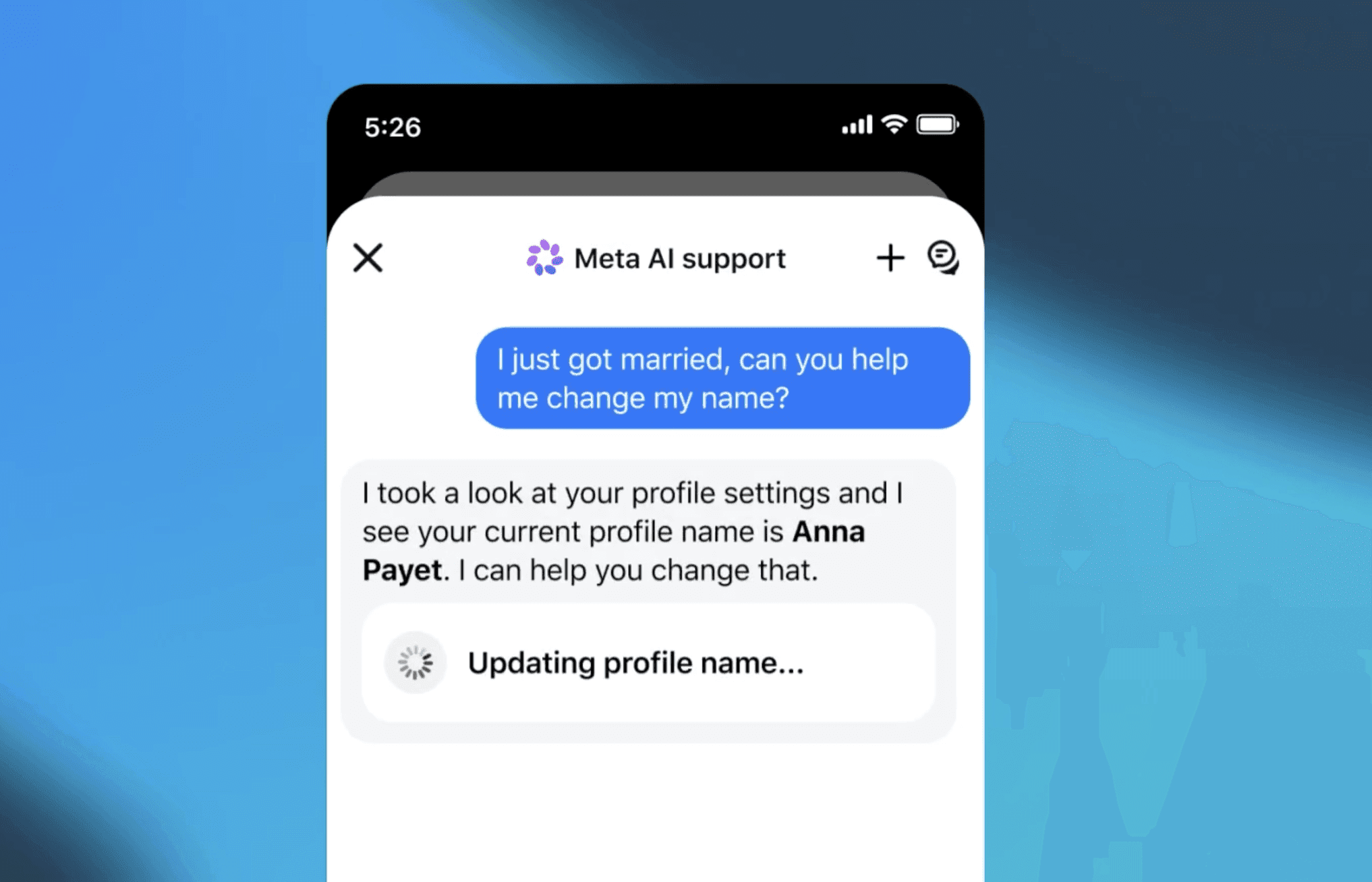

Discover the top AI tools handpicked daily by our editors to help you stay ahead with the latest and most innovative solutions.