
🎯 KEY TAKEAWAY
If you only take one thing from this, make it these.
Hide
- Google Cloud announced new capabilities for Vertex AI Pipelines to simplify machine learning workflows
- The updates reduce operational complexity, making MLOps more accessible to development teams
- Focuses on automated pipeline orchestration, monitoring, and deployment for enterprise users
- Represents a significant step in democratizing AI development within cloud environments
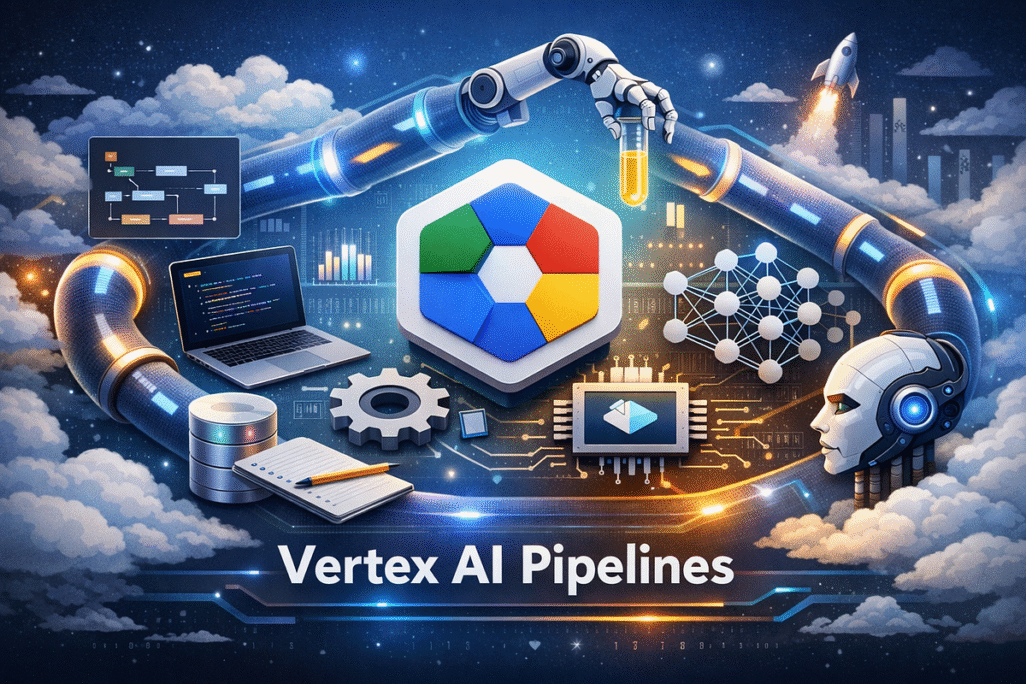
How Vertex AI Pipelines Makes Machine Learning Workflows Actually Effortless
Google Cloud recently enhanced Vertex AI Pipelines with features designed to streamline complex machine learning workflows. According to their announcement, these updates target the operational bottlenecks that traditionally slow down AI development cycles. The improvements matter because they address critical MLOps challenges—pipeline orchestration, model monitoring, and deployment automation—that affect enterprise AI adoption rates.
Core Features and Capabilities
The updated platform introduces several key improvements for ML workflow management:
Automation and Orchestration:
- Automated pipeline execution: Reduces manual intervention required for running ML workflows
- Integrated version control: Tracks model and data lineage automatically throughout the pipeline
- Pre-built components: Offers reusable templates for common ML tasks like training and evaluation
Monitoring and Management:
- Real-time performance tracking: Provides dashboards for monitoring model behavior post-deployment
- Automated alerting: Triggers notifications when model drift or performance degradation occurs
- Centralized governance: Consolidates pipeline metadata for compliance and audit purposes
Developer Experience:
- Simplified configuration: Uses declarative YAML definitions for pipeline setup
- Notebook integration: Allows pipeline development directly within Vertex AI workbooks
- Debugging tools: Includes step-by-step execution logs for troubleshooting failures
Impact on Enterprise AI Teams
These updates significantly affect how organizations build and maintain AI systems:
Operational efficiency:
- Reduced overhead: Teams spend less time managing infrastructure and more time on model development
- Faster deployment: Automated workflows accelerate the path from experimentation to production
- Lower barrier to entry: Simplified tools make MLOps accessible to data scientists without deep DevOps expertise
Cost and resource optimization:
- Resource management: Efficient scheduling reduces compute costs for training and inference
- Error reduction: Automated checks prevent costly production failures
- Scalability: Serverless architecture handles variable workloads without manual provisioning
Future Direction and Integration
Google Cloud continues investing in making Vertex AI Pipelines the central hub for enterprise ML operations. The platform now integrates natively with BigQuery, Cloud Storage, and other Google services, creating a unified ecosystem. Future roadmap items include enhanced AI-assisted pipeline optimization and expanded support for hybrid cloud deployments.
Conclusion
Google Cloud’s Vertex AI Pipelines updates represent a meaningful shift toward making machine learning operations truly effortless for development teams. By automating complex orchestration tasks and providing comprehensive monitoring, the platform addresses the core pain points that have historically slowed AI adoption.
As enterprises continue scaling their AI initiatives, tools that reduce operational complexity will become increasingly critical. The integration of these pipeline capabilities within the broader Vertex AI ecosystem positions Google Cloud as a strong contender for organizations seeking streamlined MLOps solutions.
Teams currently struggling with custom pipeline infrastructure should evaluate whether these managed capabilities can accelerate their AI roadmap while reducing total cost of ownership.
FAQ
What is Vertex AI Pipelines?
Vertex AI Pipelines is a managed service from Google Cloud that automates machine learning workflow orchestration. It helps teams run, monitor, and manage ML pipelines without managing underlying infrastructure, making MLOps more accessible to data science teams.
How does it make ML workflows effortless?
The platform reduces complexity through automation, pre-built components, and declarative pipeline definitions. Teams can deploy models faster with automated monitoring, version control, and integrated debugging tools that eliminate manual DevOps overhead.
What types of organizations benefit most?
Enterprise AI teams, mid-sized companies building ML applications, and data science groups without dedicated MLOps engineers benefit significantly. Organizations running multiple model pipelines or struggling with deployment complexity see the biggest efficiency gains.
Does it integrate with existing Google Cloud services?
Yes, Vertex AI Pipelines integrates natively with BigQuery, Cloud Storage, and other Google Cloud services. This creates a unified ecosystem where data, models, and pipelines work together seamlessly without custom integration work.
What are the key automation features?
Key features include automated pipeline execution, real-time performance monitoring, automated alerting for model drift, and centralized metadata tracking. The service also provides pre-built components for common ML tasks like data preprocessing and model evaluation.
How does this compare to building custom MLOps solutions?
Managed pipelines reduce infrastructure management, maintenance overhead, and development time compared to custom solutions. Teams can focus on model development rather than pipeline infrastructure, though custom solutions may still offer more granular control for specialized use cases.





















 https://ageofai.tools/u/
How would you rate Vertex AI Pipelines: Effortless Machine Learning Breakthroughs?