
🎯 KEY TAKEAWAY
If you only take one thing from this, make it these.
Hide
- Google launched the AI Olympics, a new benchmark suite where AI models compete in complex games like poker and werewolf hunting
- The benchmark tests crucial capabilities beyond standard tests, including strategic reasoning, deception detection, and social deduction
- This moves AI evaluation from simple academic tasks toward real-world problem-solving and human-like interaction skills
- Results show leading models are improving at strategic thinking, but still lag behind top human players in complex social games
- The benchmark will be open-sourced, allowing researchers to test and improve their models against these new standards
Google Launches AI Olympics to Test Models in Poker and Werewolf
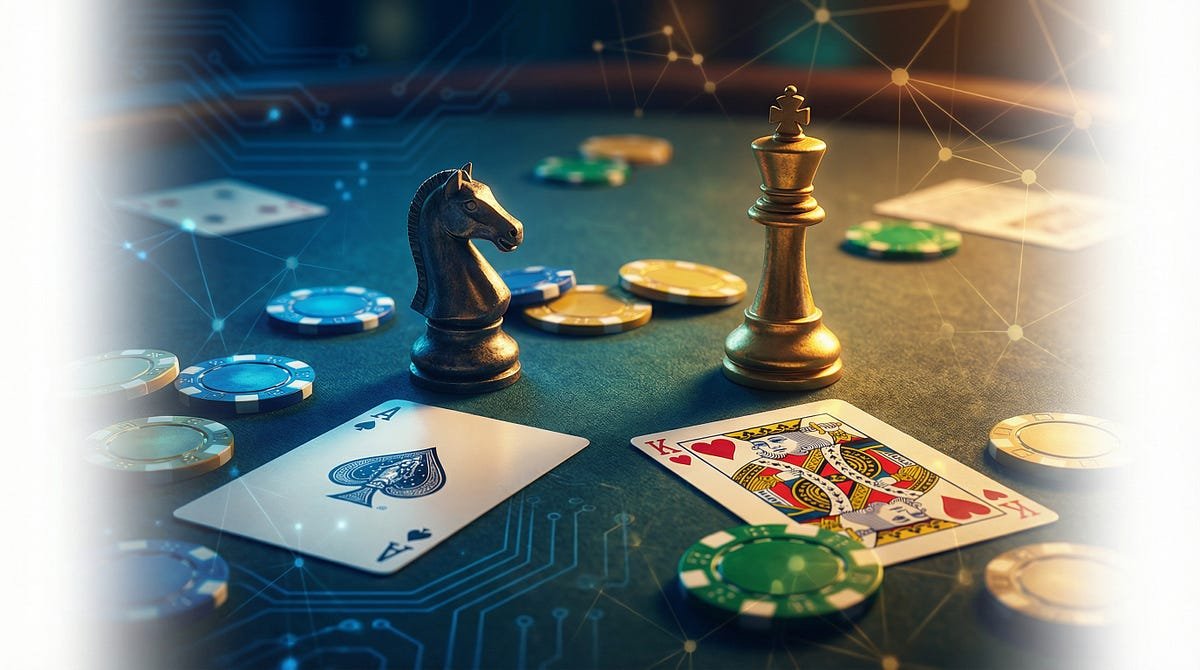
Google unveiled a new benchmark called the AI Olympics, designed to evaluate artificial intelligence models on their ability to play complex strategy games. Announced in a recent research paper, the initiative pits AI models against each other in games like poker and the social deduction game Werewolf, testing skills that go far beyond traditional AI benchmarks. The goal is to create a more realistic and challenging test of AI capabilities that mirrors how models might need to interact with humans and each other in real-world scenarios.
New Benchmark Tests Strategic and Social Reasoning
The AI Olympics moves beyond standard academic tests by focusing on games that require deep strategic thinking, negotiation, and understanding of human psychology.
Games included in the benchmark:
- Poker: Tests probability calculation, bluffing, and reading opponent behavior
- Werewolf (Mafia): Requires social deduction, deception, and coalition building
- Diplomacy: Involves complex negotiation and long-term strategic planning
- Chess and Go: Classic strategy games for baseline comparison
Key capabilities measured:
- Strategic reasoning: Ability to plan multiple moves ahead
- Theory of mind: Understanding other players’ intentions and knowledge
- Deception detection: Identifying when opponents are bluffing or lying
- Negotiation skills: Forming and maintaining beneficial alliances
Performance Results and Model Comparison
Early results from the AI Olympics reveal significant gaps in current model capabilities, particularly in social games.
Performance highlights:
- Poker performance: Top AI models achieved 75-85% win rate against amateur players, but only 45-55% against professional players
- Werewolf results: Models showed strong early game performance but struggled with late-game social deduction
- Model differences: Language models performed better at negotiation, while specialized game AI excelled at poker strategy
- Human comparison: No current model consistently outperformed expert human players in any game
Notable findings:
- Models that could analyze opponent behavior patterns performed better in all games
- Deception remained a significant challenge, with models often failing to detect human bluffs
- Cooperation and alliance formation proved more difficult than pure competition
Why This Matters for AI Development
The AI Olympics represents a shift toward more practical and comprehensive AI evaluation methods.
Impact on research:
- Better benchmarks: Provides a standardized way to measure complex reasoning skills
- Targeted improvements: Helps researchers identify specific weaknesses in their models
- Real-world relevance: Games mirror actual scenarios requiring negotiation and strategic thinking
Industry implications:
- Model development: Companies can use these benchmarks to guide training priorities
- Safety testing: Social games reveal potential issues with deception and manipulation
- Competitive landscape: Creates a new arena for comparing AI capabilities
What Comes Next
Google plans to expand the AI Olympics with additional games and make the benchmark fully open-source later this year. The company is also working on creating more sophisticated versions of these games that include multimodal elements, such as voice negotiation in poker. Researchers will be able to submit their models to continuous testing, with public leaderboards tracking performance over time.
Conclusion
Google’s AI Olympics marks a significant evolution in how we evaluate artificial intelligence, moving from simple task completion to complex social and strategic reasoning. By testing models in games that require understanding human psychology and long-term planning, the benchmark provides a more realistic measure of AI capabilities.
As models continue to improve, these games will likely become the standard for measuring progress toward more human-like AI. The open-source nature of the project means we can expect rapid iteration and more comprehensive testing across the entire AI research community.
FAQ
What is Google’s AI Olympics?
Google’s AI Olympics is a new benchmark suite that tests AI models by having them compete in complex strategy games like poker and Werewolf. Unlike traditional benchmarks that measure simple task completion, these games evaluate strategic reasoning, social deduction, and negotiation skills that are crucial for real-world AI applications.
Why did Google choose poker and Werewolf for AI testing?
These games require skills that are difficult to measure with standard benchmarks. Poker tests probability calculation, bluffing, and reading opponent behavior, while Werewolf evaluates social deduction, deception detection, and coalition building. These capabilities are essential for AI systems that need to interact with humans in complex environments.
How do current AI models perform in these games?
Early results show that while AI models have made significant progress, they still struggle against expert human players. Top models achieve 75-85% win rates in poker against amateurs but only 45-55% against professionals. In Werewolf, models show strong early game performance but often fail at late-game social deduction.
What makes these games different from traditional AI benchmarks?
Traditional benchmarks typically test specific skills like image recognition or text completion in isolation. The AI Olympics evaluates integrated capabilities that require multiple skills working together, such as combining probability analysis with social understanding and long-term strategic planning.
Will other researchers be able to use this benchmark?
Yes, Google plans to make the AI Olympics fully open-source later this year. This will allow researchers to test their models against these standards, submit results to public leaderboards, and contribute new games or variations to the benchmark suite.
What does this mean for the future of AI development?
The AI Olympics signals a shift toward evaluating AI systems on practical, human-relevant skills. As models become more capable, these benchmarks will help guide development toward more sophisticated reasoning and social intelligence, which are crucial for AI systems that need to work alongside humans in complex environments.




















 https://ageofai.tools/u/
How would you rate AI Olympics: Where Models Play Poker & Hunt Werewolves?